myMedidata

임상시험은 환자들에게 많은 것을 요구합니다. 임상시험 참여가 그 과정을 더 힘들게 만들어서는 안 됩니다.

myMedidata는 환자들과 함께, 환자들을 위해 구축된 단일 환자 포털입니다. eCOA, 동의서, 센서, 비용 지급을 포함한 모든 환자의 임상시험 활동을 하나의 연결된 경험으로 통합하여, 임상시험이 진행됨에 따라 참여가 일관되게 유지되도록 합니다.

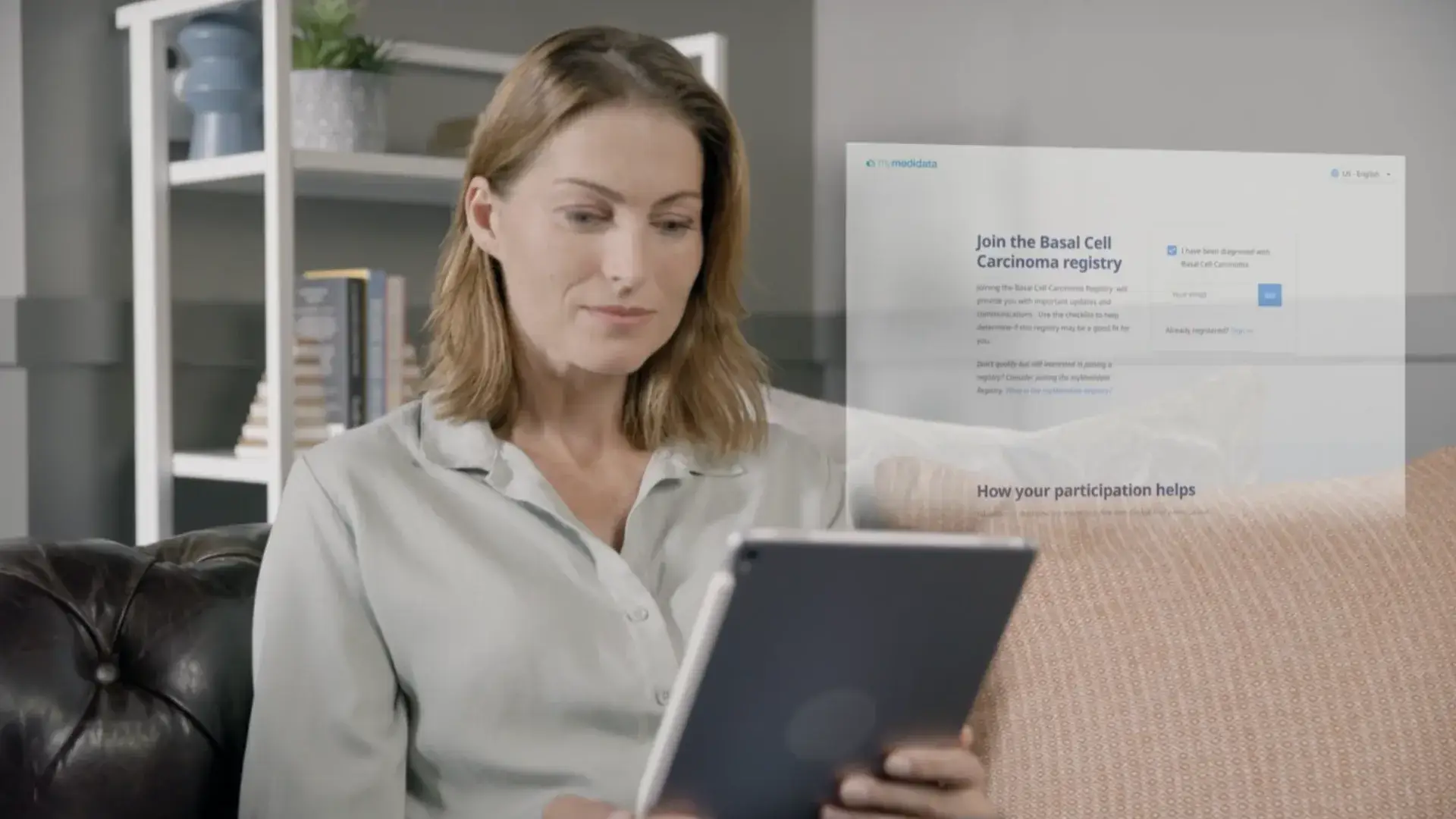
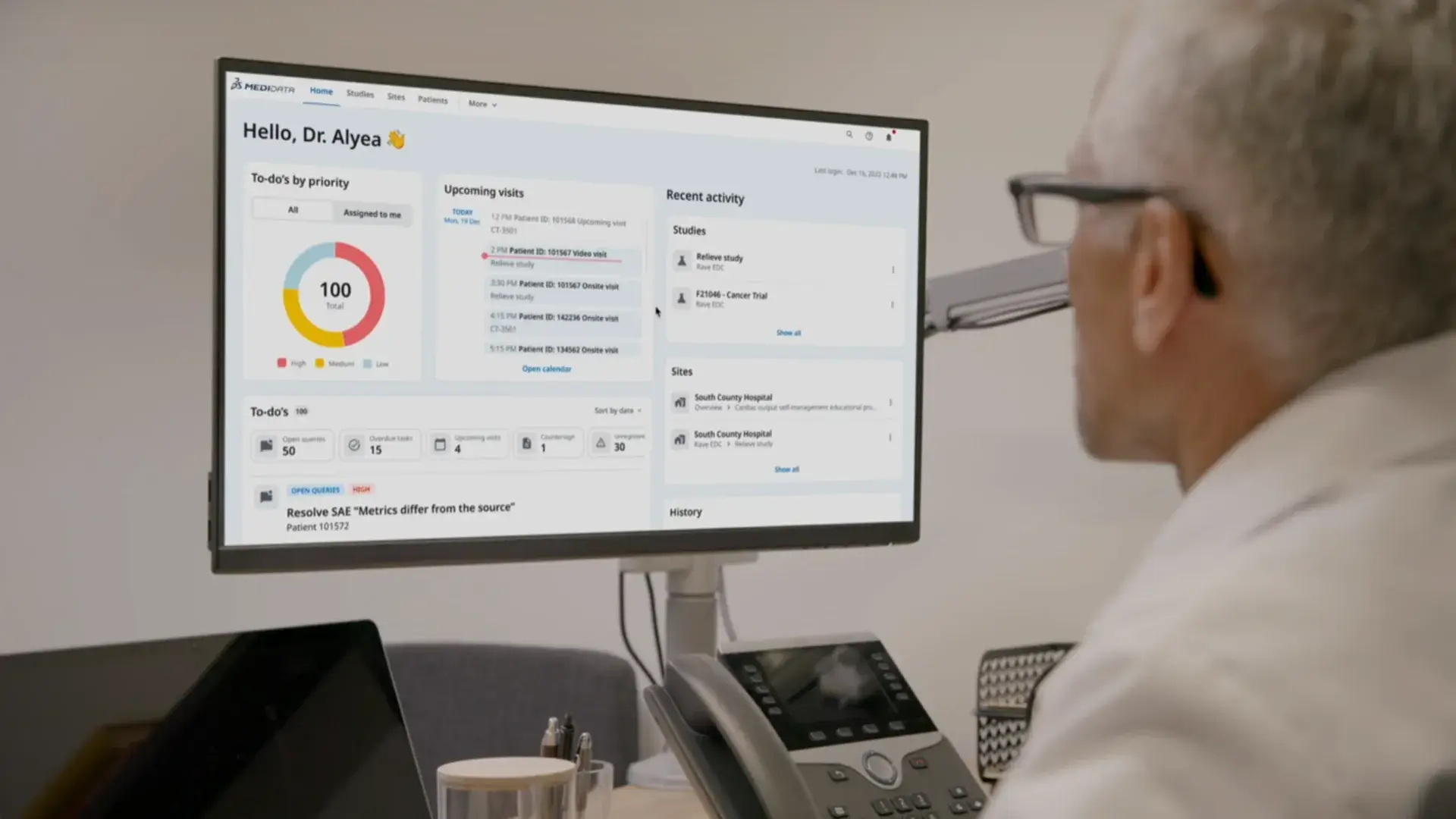
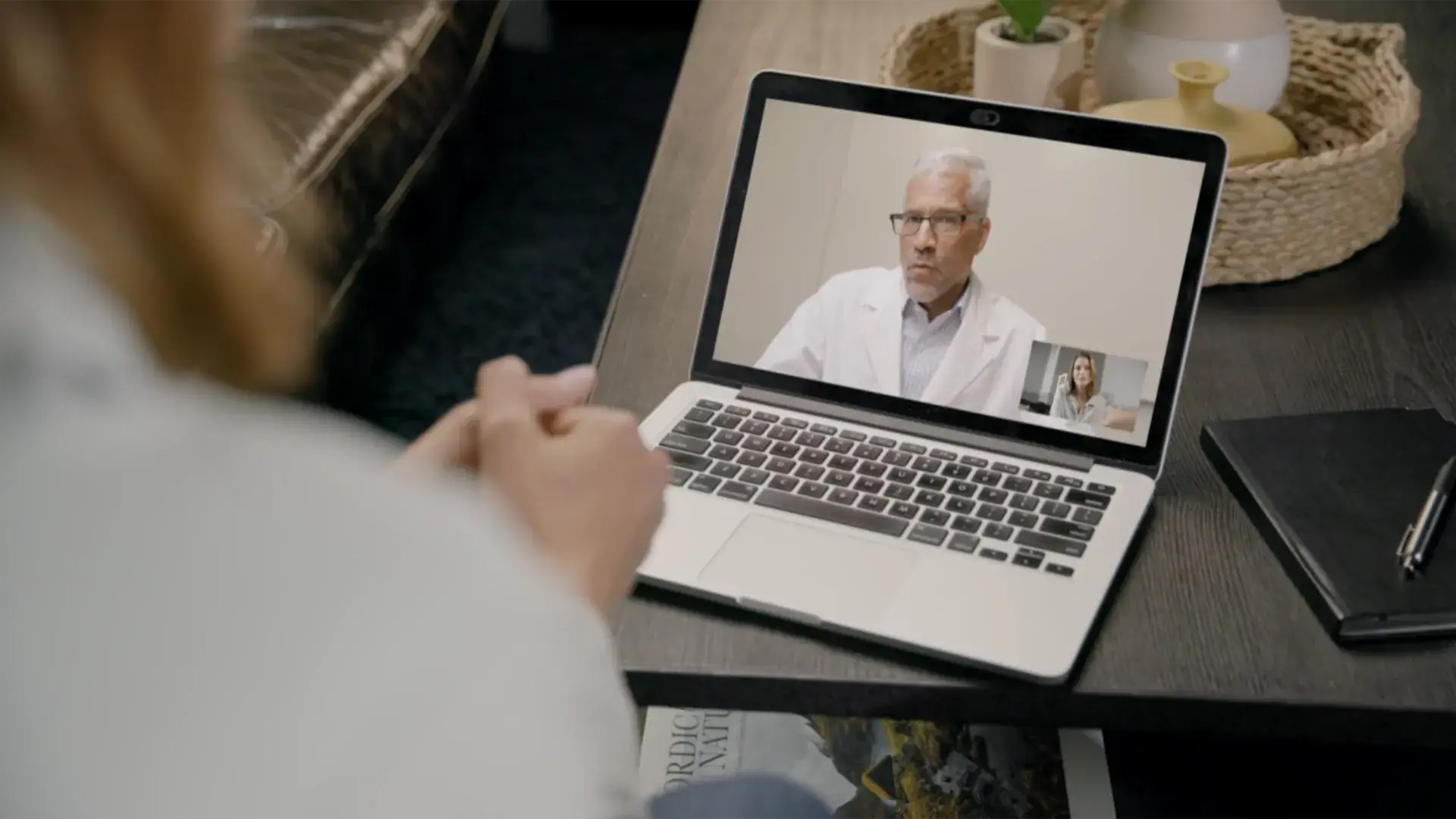
Video transcript: Lisa has been an oncology patient for three years and takes an active role in her health care. Lisa recently joined the MyMedidata Registry to learn more about clinical trials so she can find a research study that may be a good fit for her. One day, Lisa receives a notification from MyMedidata about a study that may be of interest to her. Lisa shows her doctor the information about the trial she received from MyMedI Data. They discuss the trial and determine it could be a good fit, but realize the study research center is a two and a half hour drive away from Lisa's home. Lisa's doctor calls the primary investigator of the study, Doctor. Aliyah, to discuss the trial and determine if Lisa may be a good candidate for participation. Doctor. Aliyah and Lisa connect directly over a My Medidata Live Video Call to review the study information. Doctor. Aliyah explains the consent process to Lisa and asks her to watch the video and discuss the study opportunity with her loved ones. Lisa watches the video and decides she wants to participate and signs the eConsent form through her My Medidata account. Lisa also consents to link her electronic health record data, such as previous surgeries or other medical related information, to her clinical trial data through Medidata Link in order to allow researchers to learn more about her health and possibly remove the need for extra clinic visits. Doctor. Aliyah checks Lisa's electronic health record, EHR information, and transfers relevant data into RAVE EDC, the electronic data capture system. Lisa is now a participant in the study. Using a hybrid decentralized clinical trial model, she has some visits in the clinic and some at home with medication and other study supplies being shipped directly to her home. Out of the five site visits required in the study protocol, she is able to complete three at home. This flexibility significantly reduces Lisa's travel burden and saves her from needing to take several days off from her job. She wears a sensor to collect some data information and she enters some into a study diary application on her phone. During study visits on-site and through video visits, Aliyah and Casey, the study coordinator, enter information into Ray VDC. Her study doctor can also see her diary responses, as well as her sensor and image data, all in one place. It's easy for Doctor. Aliyah to see how Lisa is doing in the study. Once Lisa has completed her clinical trial, she transitions from the study into long term follow-up through My Medidata registries. She learns that the medication was approved and her participation helped many others. She also receives her clinical trial data back and is able to keep access to it on her MyMedidata account where she can share it with her primary care doctor. Lisa is happy with how much support she received through every step of her clinical trial journey. Because of this, she's even more interested in joining future clinical trials.

하나의 계정, 간소화된 참여

myMedidata는 환자의 참여를 단일하고 일관된 경험으로 통합합니다. 하나의 계정을 통해 환자의 불편을 줄이고, 시험기관의 업무 조율을 간소화하며, 연구 전반에 걸쳐 환자 유지를 지원합니다.

설계부터 환자 중심
어떤 기기든 자유로운 사용
경계 없는 임상시험

환자와 시험기관(Site)의 얼라인먼트 유지

환자

모든 임상시험 활동을 위한 단 하나의 공간

환자에게 모든 임상시험 활동을 처리할 수 있는 단 하나의 장소를 제공함으로써 추가적인 앱 설치, 번거로운 로그인, 불필요한 단계를 없앱니다.

myMedidata는 환자가 전체 임상시험 여정 동안 간편하고 지속적으로 참여할 수 있도록 지원합니다.

Video transcript: Lisa has been an oncology patient for three years and takes an active role in her health care. Lisa recently joined the MyMedidata Registry to learn more about clinical trials so she can find a research study that may be a good fit for her. One day, Lisa receives a notification from MyMedidata about a study that may be of interest to her. Lisa shows her doctor the information about the trial she received from MyMedI Data. They discuss the trial and determine it could be a good fit, but realize the study research center is a two and a half hour drive away from Lisa's home. Lisa's doctor calls the primary investigator of the study, Doctor. Aliyah, to discuss the trial and determine if Lisa may be a good candidate for participation. Doctor. Aliyah and Lisa connect directly over a My Medidata Live Video Call to review the study information. Doctor. Aliyah explains the consent process to Lisa and asks her to watch the video and discuss the study opportunity with her loved ones. Lisa watches the video and decides she wants to participate and signs the eConsent form through her My Medidata account. Lisa also consents to link her electronic health record data, such as previous surgeries or other medical related information, to her clinical trial data through Medidata Link in order to allow researchers to learn more about her health and possibly remove the need for extra clinic visits. Doctor. Aliyah checks Lisa's electronic health record, EHR information, and transfers relevant data into RAVE EDC, the electronic data capture system. Lisa is now a participant in the study. Using a hybrid decentralized clinical trial model, she has some visits in the clinic and some at home with medication and other study supplies being shipped directly to her home. Out of the five site visits required in the study protocol, she is able to complete three at home. This flexibility significantly reduces Lisa's travel burden and saves her from needing to take several days off from her job. She wears a sensor to collect some data information and she enters some into a study diary application on her phone. During study visits on-site and through video visits, Aliyah and Casey, the study coordinator, enter information into Ray VDC. Her study doctor can also see her diary responses, as well as her sensor and image data, all in one place. It's easy for Doctor. Aliyah to see how Lisa is doing in the study. Once Lisa has completed her clinical trial, she transitions from the study into long term follow-up through My Medidata registries. She learns that the medication was approved and her participation helped many others. She also receives her clinical trial data back and is able to keep access to it on her MyMedidata account where she can share it with her primary care doctor. Lisa is happy with how much support she received through every step of her clinical trial journey. Because of this, she's even more interested in joining future clinical trials.
Video thumbnail

myMedidata에서 하나로 통합되는 솔루션

myMedidata는 Medidata의 환자 대상 솔루션들을 단일한 경험으로 통합하여, 연구 전반에 걸쳐 참여, 소통, 데이터 수집이 긴밀하게 연결되도록 유지합니다.이를 통해 환자에게는 일관된 경험을 제공하고, 연구 팀에게는 단일화된 환자 데이터 소스를 제공합니다.

Featured Resource


분산형 임상시험의 가치

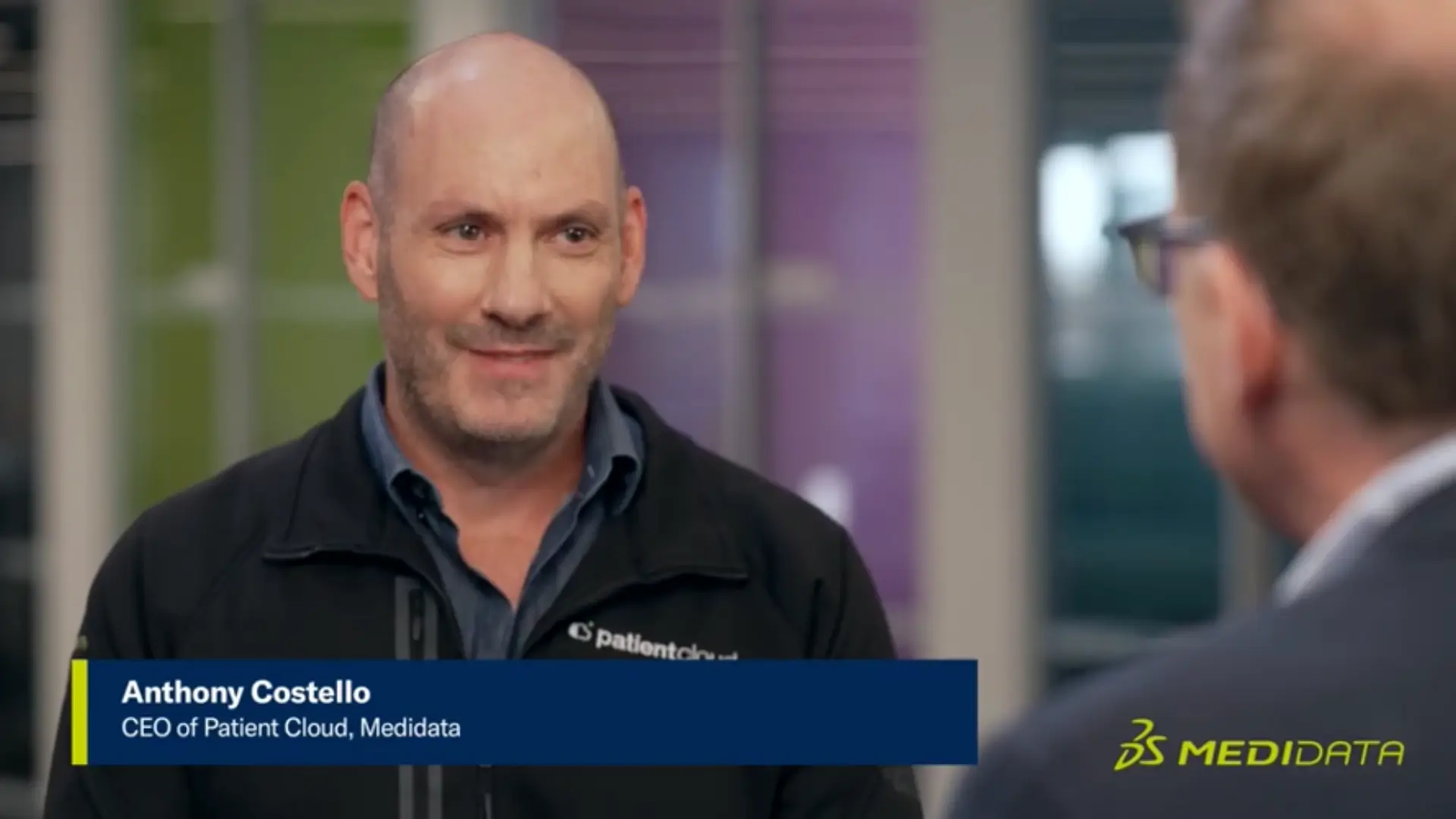
분산형 및 하이브리드 임상시험 모델이 환자의 참여, 시험기관의 워크플로우, 그리고 임상 수행 방식을 어떻게 변화시키고 있는지 확인해 보세요. 아울러 이러한 패러다임의 전환이 향후 연구를 계획하고 있는 의뢰사에게 어떤 의미를 갖는지 Medidata CEO의 인사이트를 통해 직접 들어보실 수 있습니다.

Video transcript: Welcome to the HBR Video Quick Take. I'm Todd Puzan, senior editor for Research and Special Projects at Harvard Business Review. Decentralized clinical trials, or DCTs, use a method of conducting clinical trials, where parts or all of the trial happen outside a traditional physical clinic or trial site. This opens up barriers to participation, enabling more patients to participate in research. And it enhances the overall trial experience for everyone. Anthony Costello is CEO of Patient Cloud at Dassault Systeme. In this role, he leads the development of Medidata's patient facing activities and solutions, including decentralized trials technology and strategy, Patient Cloud, Dassault Systeme product apps, My Medidata patient portal, disease registries and recruitment, telehealth and virtual visits, and Sensor Cloud and biomarker discovery. He's here today to talk to us about the rising adoption rates of DCTs and how these solutions affect research. Anthony, thank you for joining us. Thanks so much for having me, Todd. Anthony, what do decentralized trials and the use of new technology mean for patients, for pharmaceutical companies, for doctors? You know, we're in such an interesting time in the history of clinical trials and research. If you think about the way trials have been done traditionally, they're very heavily centralized, meaning patients travel to a research center often many times per month for months and months during a clinical trial. So what we mean when we say trials are now being decentralized is that the research is moving outside these central research sites and more into the patients' real lives. And the reason this is so important for the industry is if you think about the way research gets done and then new drugs get commercialized into the market, patients use these products in their real lives, in the real world, obviously not in a method that's centralized around a research center, but in their day to day lives. We're trying to move the industry and the research part of discovery into the real world where these drugs will actually be used after they're commercialized. It's a critical moment for the way research gets done, the pace of research, the ease of research for patients, the quality and quantity of data that we're capturing. All things that are much easier to get and to achieve in a decentralized model. Okay, so pharmaceutical companies, what do they need to be thinking about when they're considering a DCT model for research? This has been the real challenge for our industry. We have a conservative pharmaceutical industry, very largely based on regulation, paper processes, paper data capture, paper consent signatures, and so on. And a lot of what we've done over the last few years as an industry is we've begun to embrace and leverage the natural curves in the world of technology. Patients have more technology in their hands. They're more accustomed to using it. They're more trusting of providing information and receiving information through digital devices. Most patients carry some sort of device with them in their pocket all day, every day that's perfectly suitable for research. So the kind of hump to get over has been will pharma decide to use these capabilities in this kind of, call it this new digital era, as a way to conduct the research that maybe we formerly would have done in paper or a much more cumbersome process. So if you combine the idea that we want to decentralize outside of a site setting, Then you add in, we have the technology, the patients have the technology, they're comfortable with it, we can scale it, it's affordable. All of these things that you couldn't say ten years ago, or maybe even five years ago in some cases. You start to layer in things like wearable sensors that are getting easier to use, better battery lives, smarter, faster, better quality data. You kind of put it all together and we're in this perfect storm in the industry right now to hyper accelerate research across all different types of disease indications. We saw a little bit of this during COVID, maybe I'll call it kind of a foreshadowing of where our whole industry tries to go now. Because of a global pandemic, there was a lot of kind of consolidation around, let's do this faster, let's have more outreach to patients, let's decentralize. Now you're seeing that become the new normal, the trend, and everyone's looking for ways to leverage this perfect storm, if you will, as a way to change the way all clinical trials work into the future. And if we do it right, what we'll be doing is going from a world where we try to expose as few patients as possible to an experimental product, which obviously we always want to do that, but we want to expose the right patients, we want to do it in a way that's not too burdensome for them, and we want to make sure that when that drug gets approved and hits the market and millions of people take it, that we've done the research in as close a setting as we possibly can to the kind of real world commercial setting where those people will use that product. That sounds great. So a patient, how does a patient participate in a DCT? You know, interestingly, I would say patients don't get to choose DCTs as much as DCTs choose them. It's because if you're a patient, you enroll in a study, many times because you have no other healthcare option for your particular disease. Sadly, many patients, the clinical research may be the last option that they have after trying everything else for whatever condition they have. So a patient will choose a study out of necessity in a lot of cases, and hopefully what we're aspiring to support in this industry and what we're working with our customers to try to achieve is, more optionality for that patient on that study to be able to use these technologies in their real world setting. Patient burden is a huge problem in our industry. Sticking on these trials for a year, a year and a half, going back and forth to study centers all the time is very burdensome. We lose a lot of patients, and frankly we have a lot of patients who qualify for the study, they need the study, they have the right set of inclusion criteria for that study, but they simply can't participate due to geographical proximity to some study center that's running that trial. So decentralization, if you're a patient on a study that happens to be decentralized, you're much more likely to stay with that study throughout, to be able to participate in that study regardless of where you live, and then, as I said earlier, to be able to provide real world data from your day to day activities that are critical to the pharmaceutical company really understanding how their drug's gonna work when it hits markets. So it's a hard choice to make for our customers. It is a challenge to decentralize a clinical program that you have formerly run entirely at research centers, but if you do it, there's a huge upside both for patients and for the speed and accuracy of the research. We're expecting that both of those things are going to cause a forever new trend of decentralization in clinical trials. That's great. It sounds like a very promising set of developments. Anthony, thank you so much for being with us today. This is fascinating. Thanks again for having me. It's been fun, I appreciate it. To learn more about Medidata and decentralized clinical trials, please visit the link below.

Video thumbnail

More Resources


더 자세한 내용과 관련 자료 살펴보기

모든 Resource 보기

myMedidata 로그인

LOG IN

FAQ

네, 가능합니다. myMedidata는 환자가 임상시험 정보 확인, 동의서 작성, 설문조사 완료, 비용 지급 처리 등 모든 임상시험 활동에 접근할 수 있도록 설계된 단일 목적의 환자 포털입니다. 이러한 통합적 접근 방식은 여러 개의 로그인과 애플리케이션을 사용할 필요를 없애 환자의 경험을 간소화합니다.

네, 지원합니다. 웹을 통한 접근성 외에도 myMedidata 네이티브 앱은 iOS와 Android 모두에서 이용 가능하며, 회사에서 제공하는  기기(provisioned devices)뿐만 아니라 개인 기기 사용(BYOD) 모델도 지원합니다.

네, 지원합니다. myMedidata Registries는 환자의 참여를 일회성 활동에서 임상시험 전후를 아우르는 장기적 참여 방식으로 확장합니다. 이를 통해 의뢰사는 환자들에게 연구에 대해 안내하고 교육할 수 있으며, 임상시험 시작 전에 사전 자격을 갖춘 예비 참가자 풀을 구축하고, 임상시험 종료 후에는 향후 임상시험 기회를 제공하는 후속 관리를 진행할 수 있습니다.

환자는 자신의 myMedidata 계정을 통해 동의서, eCOA, 센서, 비용 지급, 원격 진료(telehealth) 등 방문 또는 원격으로 임상시험 과제를 완료하는 데 필요한 모든 툴에 접근할 수 있습니다. myMedidata를 통해 수집된 모든 데이터는 Rave로 즉시 유입되므로, 시험기관은 실시간 가시성을 바탕으로 규정 준수를 보장하는 동시에 환자의 이동 부담을 줄일 수 있습니다.

네, 제공합니다. Medidata는 고객사와 파트너사를 위해 자기 주도형 학습(Self-paced)과 강사 주도형 교육(Instructor-led)을 포함한 다양한 교육 옵션을 제공하고 있습니다. 현재 이용 가능한 교육 과정 및 관련 자료는 Medidata Global Education and Training 섹션에서 확인할 수 있습니다. 

상담하기

질문이 있으신가요? 가격 정보 또는 다음 단계에 대해 알아보고 싶으신가요? 지금 전문가와 상담하세요. 저희 팀이 도와드리겠습니다.

문의하기