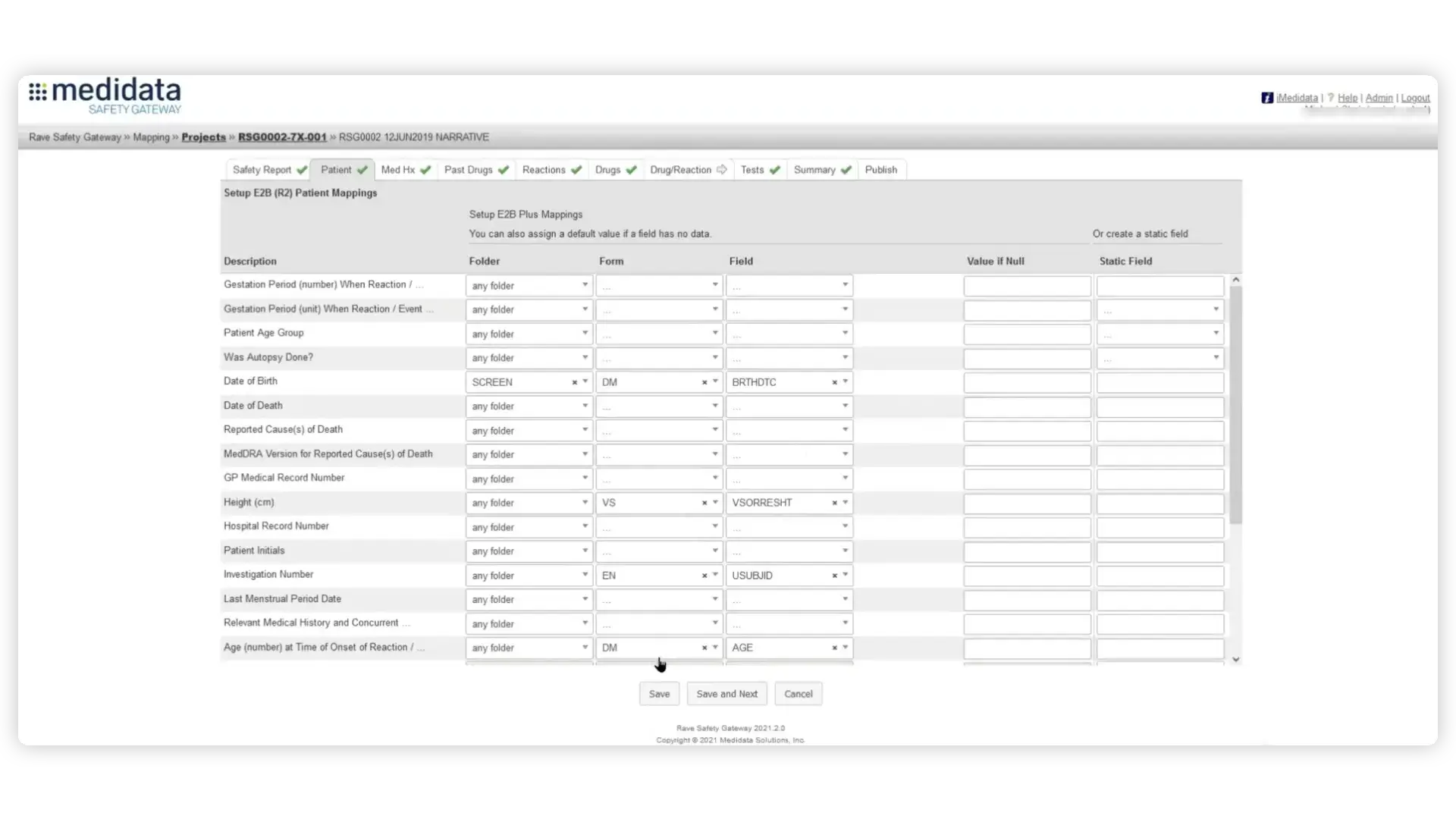
Video transcript: Welcome to this introduction to RAVE Safety Gateway. Traditionally, the processing of safety data from a clinical trial is a labor and time intensive process, primarily because the data must be entered twice: once in a clinical trial system and once in the safety system. This necessitates time consuming reconciliation between the two systems. RAVE Safety Gateway is a configurable solution that automates the process of transmitting safety data directly from Ray VDC to any safety system which can import E2B files. The two module solution includes a mapping module to identify data from the clinical trial which needs to be transmitted, as well as a management module to apply business rules to this process to improve the quality of the data. Received. The mapping module leverages the unification between RAVE Safety Gateway and RAVE EDC. All fields in your RAVE EDC study are available to the Safety Gateway mapping module and can be associated with the relevant E2B tags allowing you to generate ICH compliant E2B files in both R2 and R3 formats directly from your study's electronic case report forms. The mapping module is intuitive, ensuring that only relevant fields are selected in the mapping process. For example, when mapping a field from a demographics page to the date of birth tag, only date fields are presented despite many more fields actually existing on the demographics page. In addition to being able to map variables by their corresponding visit form and field names, static values can be assigned as well as default values if the mapped field returns a null value. All of this makes the mapping process flexible and effective. As information is entered into RayDVC, there are multiple ways in which the resulting transmission of data from EDC to your safety system can be managed. Data can be streamed in an automated fashion directly to your safety system immediately after relevant fields have been entered or changed in Ray VDC. Alternatively, a trigger field can be created. This trigger field can act as an approval option, allowing information to come across in a bulk fashion so as to avoid excessive creation of initial and follow-up e two b files. These trigger fields can also include a time trigger option that periodically pulls for untriggered changes and then forces the transmission to ensure that critical safety information is never delayed. Either option, automatic or triggered, can also include the option to manually transmit the subsequent e two b files. This manual option includes a staging area in which e two b files can be reviewed and optionally modified prior to transmission to the safety system. This collaborative area allows users from both the clinical and safety teams to ensure that the cleanest data is transmitted to the safety system. It also provides an opportunity to create discrepancies that are available in real time to the clinical team, compressing the time to reconcile issues from days and weeks to hours and minutes. Within the management module, the admin section includes configurable business rules to improve the quality of the transmitted ETB files with settings that control, among many things, time trigger events, selection rules to provide the most contemporaneous data, and standard notifications. These notifications can be configured to be sent to specific roles, sites, or even specific users. The subject and body of the emails can include dynamic variables that will populate with information from the safety case, making it easier for the recipients to process the information effectively. Safety Gateway significantly decreases the processing cycle around the acquisition and reporting of safety data from clinical trials. The unification between EDC and Safety Gateway eliminates the labor intensive process of manually entering data and reconciliation of any differences. This helps keep your pharmacovigilance team compliant with their reporting obligations, as well as gives your sites more time to focus on important tasks like patient care.