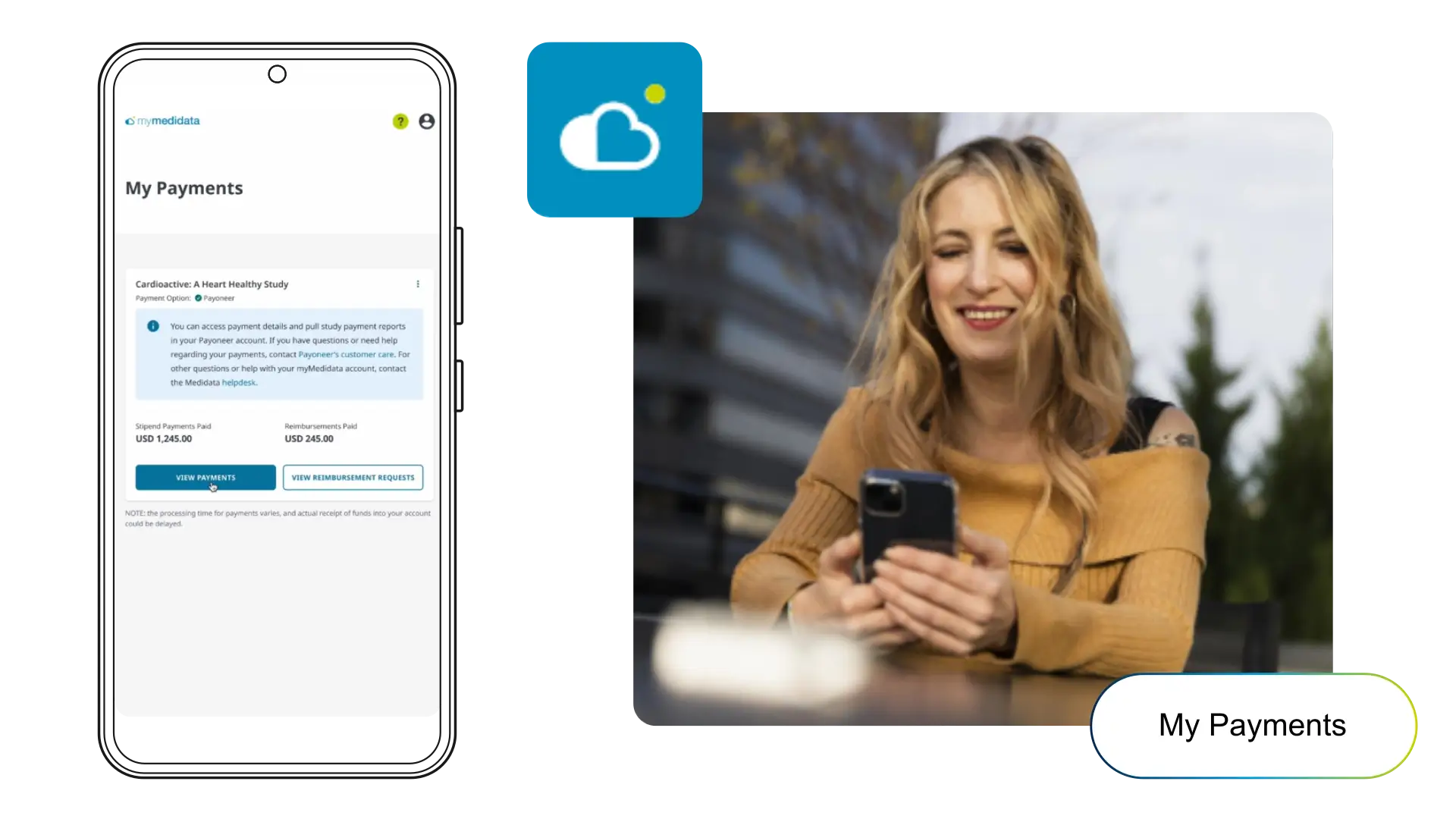
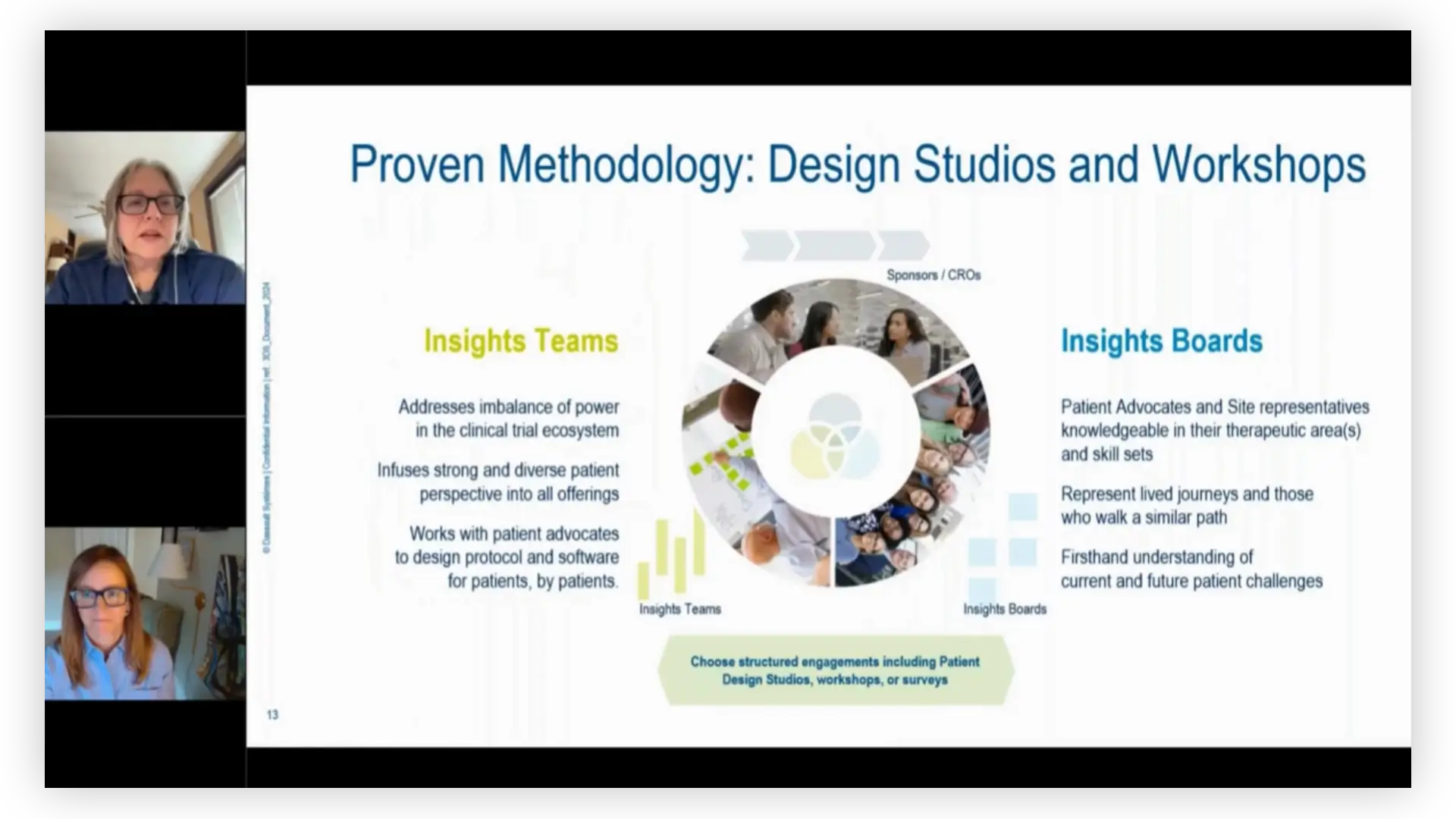
Video transcript: Now, it's my pleasure to introduce our speakers for today's event. And first, I'd like to introduce you to Alicia Staley. She serves as the Vice President of Patient Engagement at Metadata. She oversees the Patient Insights Program and Patient Insights Board. She works to infuse the patient perspective throughout the product development lifecycle and help engage patients in novel ways. She created Patient Centricity by Design in twenty eighteen as a way to provide structure and governance for developing patient centric technical solutions. Next, is my pleasure to introduce you to Megan Harrington and she serves as the vice president there she is. Hello there, Megan. She serves as a vice president of clinical trial financial management at Metadata, driving roadmap and strategy across the grants manager and site payment products. Megan has spent more than fifteen years working in the life science technology technology industry rather. Most recently, she focused on the investigator grant administration domain, driving strategy and leading teams implementing payment technology in both BPO and enablement models. Now with that introductions over the over with, we are now going to pass the mic over to our first speaker, and that's Alicia. You may begin. And very happy to be here this morning to talk a little bit about, patient payments and patient centricity and what we're doing here at Metadata to really improve the patient experience through the solutions that we bring to market. So we've got a packed agenda. Sorry for the late start, but we're going to dive right into patient centricity, talk a little bit about how the patient experience is shaping our software development life cycle at metadata. Then we're really going to get to the heart of our conversation today around patient payments, what really matters to patients, and how we can bring the best solutions to market to really support the patient experience. Megan's really gonna give a wonderful overview on the patient payment solution that we've developed in conjunction with our patient insights board. And then we'll wrap up our conversation today talking about future state, and what that really looks like for the patient experience. And how at metadata we're really excited about what the future holds for not only clinical research in general, but just overall patient experience in health care. So let's get started. We're going jump right into a poll. So if you've got the opportunity to vote on our poll here, we'd love to see your answers for how you describe the concept of patient centricity. Okay. So we're going to launch that poll right now. The audience members should see them. Yep, there it is everyone. If you are attending via GoToWebinar, the poll is appearing on your screen now and you can vote by clicking on any of the answers. I'll leave this poll question open for about forty five seconds just to get everybody involved in this great poll question. Perfect. That looks like it's the majority of our audience, but I'm going leave it open for a few more seconds just to get everybody involved. The question is how would you describe the concept of patient centricity? Is it you put the patient in the center, collaborative long term relationships, or patients are always right? So please go ahead and make your selection. Okay, looks like it's the majority of everyone. Thank you so much. I'm now going to close the polls and let's take a look at the results. So Alicia and Megan, here are the results. In our audience, sixty three percent said Put the patient in the center, while thirty two percent said collaborative long term relationships, and then five percent said are always right. So thank you very much everyone for participating. Now before we get into this great discussion, Alicia and Megan, what are your thoughts on the results of that poll question? Anything there surprising or not? I don't think it's really surprising. I think, you know, as we talk through our adopted definition of patient centricity, I think we'll see, understand some of the nuances that we put in this. I guess I'll I'll do a big reveal here. This was a little bit of a trick question. So but I I I love that people that some folks did vote, that patients are always right because that's usually what I lead with. But I don't know. What do you think, Megan? I I was hoping that the trick question we may have caught the the attendees, and it looks like we did. I think, you know, naturally, the patient to center is what comes to mind, but I do understand and appreciate now having been at Medidata that it's so much more than that. So eager to hear the way in which you define it with with our teams. Yeah. All right. Then let's jump right into that. Okay. There you go. So, it was a little bit of a trick question, but I encourage everybody on the call, to take a moment and look at the research paper that was published in twenty seventeen in the British Medical Journal, that was put forth by Guy Yeoman, Michael Seres. And the title of the paper is defining patient centricity with patients for patients and caregivers. And they spent a ton of time researching patient centricity, trying to come up with an appropriate definition of patient centricity. Because, you know, a lot of people sort of default to that first answer that we had in the question, which is we're just going to put the patient right at the center. Which is great. That's a great start. But, you know, as Sonia said, we were sort of teasing that out a little bit more in this definition. And if you really dig into their research report, they put forth what I would call a very elegant definition of patient centricity, which is putting the patient first in an open and sustained engagement of the patient to respectfully and compassionately achieve the best experience for the patient and their care team and their family. And that's really about building relationships with patients, giving patients the opportunity to be a true player, if you will, in their healthcare journey. And by allowing for relationships to grow with the patients that you're serving, it just makes the patient experience that much better, that much richer. You know, putting the patient in the center is a wonderful start that puts the focus on the patient, but we have to move beyond that, that there's so much more that we should be doing and can be doing to elevate the patient experience. So shine the light on the patients, absolutely, but walk with them hand in hand to really build the best patient experience. And that's really what we're trying to accomplish at metadata. We're sort of changing the culture from the inside out, thinking about the concept of patient centricity, and why it's so important for us to build relationships with patients in new and novel ways. So next slide. So why does metadata invest in patient insights program? We have a formal program at metadata called the patient insights program, where we have a team that work with a number of patient advocates and work with all of our product managers, software developers, and engineers to improve the patient experience. So for us, this is about building empathetic technical solutions, technical solutions that are very efficient, and really elevate the patient experience overall. So we've really worked very hard over the last five years, which is the length of time that this insight program has been in existence, to really help our teams look at the patient experience in a new way. And understand that while they might be building a technical solution that never even, the patient might never even see, if they're not doing that, if they're not working to create the most effective and efficient solution in what they're working on, there's gonna be downstream impacts to the patients, unintended downstream impacts to patients. And we're trying to get our teams to really look at this from in a new way, you know? And I love to share the example of an engineer that came up to me a couple years into the patient insights program and said, you know, every single time I'm working on my code and this were working in a database application that was very far removed from the initial patient experience. And he said that I think about this very differently now. When I'm designing and going through a solution, I'm thinking, is this the most effective and efficient way for me to contribute to this code base? And I realized in that moment that the whole concept of patient centricity had really impacted our company in a big way when folks were really stopping to think about, if I commit to this code, am I doing this in an effective way? And that's really to us what the whole concept of, empathetic technical solutions is all about. Next slide. So we've put together a methodology at metadata where we really look to bring the patient and site perspective in to the work that we're doing, and sort of balance it with the work that we're showcasing for sponsors and CROs. So we've really built this ecosystem where we can bring in the patient perspective and the site perspective, and allow them to shape the direction of our solutions. Make sure that we're tracking in the right direction for improving the patient experience and the site experience. And we do all this through very structured engagements with our patient insights board, which is a group of patient advocates that work with us on an annual renewing basis. We work in solutions called patient design studios, where we allow our patient advocates and our engineers and software developers and product managers to work together to be able to review solutions in development, allow patients to see them very early on, so we can course correct if need be before a solution gets too far down the road. This has been very successful for us in helping us shape the way that we design and think about our products. And I think as you hear from Megan, shortly about the patient payment solution, the patient voice was critical in the early development of the solution. And we wanted to make sure that when we stepped into the payments world, that we did it in a way that was going to elevate the patient experience. And I'm sure Megan will speak to this even more in a moment. Next slide. So just to give you a little bit more background about our patient insights program in general, we've got nine permanent patient insights board members that work with us right now on a contract basis. They represent thirty seven different therapeutic areas in total. So we like to say some of our patient insight board members are overachievers, that are dealing with multiple therapeutic area concerns. We are primarily, I would say, the majority of our patient advocates have some touch point in the oncology therapeutic area. But we cover everything from diabetes, cardiology, oncology, to rare disease, in addition to the caregiver perspective on our board. We've had over four thousand advocate hours utilized in the context of our design studios over the last few years. Our team has been very involved in the design studio methodology. We've actually hosted and completed forty five design studios. And that's covered eight metadata products overall, that we've had a material impact on as we design and develop our solutions. And this for us has really been an incredible opportunity for integrating the patient voice into our software development life cycle in a new way. So really the patient voice, our patient insights board is a touch point for our software teams to come to get feedback all different touch points in this life cycle to make sure that we're really, we're trending in the right direction in the solutions that we're providing. I'm very, very proud, that just based on the numbers of what we've accomplished over the last few years, the impact that we've had. So next slide. Thanks, Alicia. And I'm curious to know, does that eight products include patient payments, or can we adjust that now to nine? You know what? I've got to add patient payments on there. So I've got to go back and I need to go back to that previous slide and get my crayon out and and update that. So thank you for calling that out. So Yeah. It's nine products, materially impacted now. So I love it. And I'm I don't know if I've ever shared this story with you, but, it was about five years ago as an industry at an industry conference. I'm pretty sure it was the OCT conference in San Francisco. I was working for a different company, and I was listening to a product leader talk about RAVE, actually. And they mentioned the fact that Medidata was just introducing this patient insight board. And I really had this moment of, I wanna work for a company that is actually doing that, where there is not only the the talk about the need and the support of the patient, but is actively doing something to build that into their culture and the way that they're building product. And, you know, two years later, I joined Medidata, and I'm really thrilled that we had this opportunity, to work together, to develop, and really guide the teams in developing what I think is a really special experience for patients. So Oh, wow. Yeah. Really appreciate all that you're doing. And and, you know, we we move from this idea of how can we enter this space? Why do we wanna enter this space now? And how do we work within all of the opportunities or all of the different programs that we have within Medidata to really make a meaningful impact and difference in the way that patients are being paid for participating in clinical trials? So we'll get into the way in which we went about our design and then I will follow that up with sharing some insight about the patient payment product that we just launched this quarter. Next slide, please. So of course, listening to the patients is first and foremost where we started on this journey, right? And what we heard was that there was an opportunity to improve this experience for patients for a number of different reasons. And then in addition to that, we also heard the real impact that stipends and reimbursements have not only on the patient's decision to participate in that study, but also their ability to stay within that trial. You know, FDA provided guidance in two thousand eighteen, that stated that paying patients for participating and reimbursing expenses is an acceptable practice. It's a recruitment incentive. It's not a benefit for participating in clinical trials. It really is to support and pay for the inconvenience that patients experience in clinical trials. You know, and I've been in this space for quite some time, and we certainly see this growing trend in sponsor companies recognizing the importance of this to patients and adding budget into their overall clinical trial spend, right? I think that one could argue there is room for growth there, not only in a wider adoption of that practice, but in the size of those budgets to really account for those hidden costs when patients are participating in clinical trials. Cost could be the forty five dollars parking fee that they have in a major metropolitan city, or perhaps it's childcare so that patient can actually come into the practice and have a three hour visit. So as we see that growing adoption and the growing need and the the way in which this can positively impact retention and recruitment, you know, that's really why now for metadata. And based on, you know, our our, you know, our footprint within our product portfolio, the the kind of lifetime relationship that we can build through our MyMetadata product, our suite of products within clinical trial financial management, and that interconnected data ecosystem where we can more natively have that data exchange, we feel like we can really improve not only the experience, but the efficiency within this practice as well. Sonya, next slide. I do also want to call out another thing that we heard loud and clear from our patients and from sites as well. You know, sites certainly serve as a really strong advocate on behalf of the patients. But this idea of financial toxicity, which certainly is in the literature related to healthcare, right? The financial impact and decisions that patients experience when they're paying or considering going to the doctor or paying for their next medication at the pharmacy. We certainly see that, impact within clinical research as well. And we have an opportunity to not only, help to relieve that barrier and burden for patients, but also doing it in a culturally sensitive way and meeting patients where they are. And that to me means a couple of different things. One, off the bat, it's ensuring that there are opportunities or choices within the way in which patients get paid. Not everyone is comfortable sharing their banking information. Certainly not everyone has a bank account through which they can be paid. Other patients, you know, have expressed that they want greater flexibility that the debit cards aren't really a fit for purpose for them. We've got to offer choices to patients. We also need to do a better job in helping the patients make those decisions. So the way in which we communicate that experience through my metadata, the words we use, the support that we give became very important to us when we thought about how to improve and contribute to a more inclusive experience for our patients. Next slide. So this is, you know, why we got into it really starting listening to the patients, but we certainly recognize that within the patient payment experience, we're working more and touching more than just the patient, right? There's a site who is really key to operationalizing and facilitating this experience on behalf of the patients. There are sponsors and CROs that need to consider budget in the way that they're doing this and building those relationships with the patients. And so we took this multi pronged approach to our discovery so that we're taking into account the stakeholders perspective across patients, sites, those sponsors. And we did it in a number of different ways. We engaged with Alicia with the patient insights board. We also engaged with Alicia and the SCRS for site tech board. And then we also conducted external survey of sponsors last year to really get at the heart of what the sponsor's needs were. And how did that fit into the broader kind of financial management experience? And then lastly, we work, internally with our strategy and transformation teams to map out what that workflow would look like with a key client who is the early adopter, for our patient payment product. Next slide. We'll go into what we learned across each one of these stakeholder groups. So starting with our strategy and transformation team, this is a group of team members within Medidata that work across a number of different, experiences in mapping out and supporting clients, change management needs, workflow needs, etcetera. And in this particular instance, we worked with a client who wanted to shift from a more manual process of paying patients to a technology driven approach. But they needed help in in identifying not only what that work workflow was, but where there were opportunities to improve that to introduce greater efficiencies. So those teams led a gap analysis. We mapped out those user journeys. We prioritized what those stakeholders needed as relayed by that particular client. What that really helped was to drive our roadmap, right? We were able to get those user stories that then became part of our backlog and how we were defining what we were going to tackle first with patient payments. Next slide. The next group that we went to, was that survey, right? So this was a survey of one hundred and one, sponsors, based in North America, as well as within Europe. And we asked them again, what would an ideal patient payment experience look like? And a number of other questions. And what bubbled up in terms of top priority for sponsors, as it relates to patient payments is top of mind was the ability to have real time access to data that could be used to trigger those payments. So EDC data, ECOA data, that auditable record of the justification for that actual disbursement to the patients. That was primary top of the list for those sponsors that responded to that survey. Second was funding flexibility. They really have heard from the patient community that patient choice is important. You know, the flexibility in terms of being paid by PayPal or debit card or bank account or e gift card was really important for sponsors. Third was centralization of that financial information. So in the broader context of what does this mean for my original budget that we had planned for this particular study, how are we tracking towards that? Are we over spending? How does it relate to the site payments that we're making also in this study? Having that all in one experience was very important for the sponsors. And then lastly is the ability to report on that, not only from supporting ten ninety nine reporting, but looking more at forecasting and what that spend could look like and how enrollment may impact the patient payments and the forecast for particular budget item. Next slide, Sonya. And then, you know, took the feedback from those initial engagement engagements with our patient insight board, the on-site workshop with the site tech board, where we had sticky notes on walls. We were also doing a mapping up exercise of what are the must haves for sites, right? We were able to host both the patient insight board and the site tech board at a summit in New York earlier this year. And by all accounts, it was a great success. And this was a real opportunity for us Medidata to come back to those sites and come back to those patients and acknowledge in a respectful way that the time that they invested the year prior in giving all of that feedback has actually materialized into something very tangible. This experience within the product that we were taking that direct feedback and tying it to the feature work we were doing in that application. So we were able to showcase that, validate, kind of workshop some design questions that we had in terms of the language that we're using within the MyMediData experience or what was based on the site workflow, what needed to be adjusted now that we had developed it. So it was a great opportunity to get that live feedback. And, you know, I wanted to point out those top priorities for patients and sites. So we heard what's important to the sponsors and there's some common threads there. I think one is the desire for transparency that is clear across all stakeholders. So for patients that transparency means the ability to see what am I getting paid for? You know, as simple as that. Where's the record of why I'm getting paid forty dollars or why am I getting paid one hundred and fifty dollars? But also the transparency into the status. Where is that reimbursement that I submitted two days ago? Where is it in that process? Who is it sitting with? When can I expect that payment? And really to empower the patient to make choices about their disbursement choice. Top of mind also for patients is that user experience, not only that experience within the application itself, but that experience with the help desk. I think, you know, long wait times and frustration with, with that process is something that we are, very eager to really address and change for our patients with our patient cloud help desk. So, you know, user experience, both design and also the way in which we're interacting with patients. First sites, top of mind for our sites are funding flexibility. Again, that common thread throughout each of the different stakeholder groups. Transparency is really important for the sites as well. And those detailed reports so that they can better understand the total payments that have gone out to patients, that they can see that in the broader context of the payments that they're receiving as well. So as part of that summit, not only did we demonstrate workshop those things, we were able to come back and say, you know, this is a product that we designed with this patient centric design approach in mind so that we are creating these lifetime relationships, with our patients. And it was really satisfying to come back to the site tech board in particular to say, you know, you remember those fourteen must haves that you put up on the wall at the SERS in Florida last year? Well, we've now delivered an inner product. Eighty five percent of those must haves are there, and that remaining fifteen percent actually is part of our roadmap for our site payments application. So again, being respectful in our design, but also in the investment of time that our patients in our sites are generously giving to help us deliver a product that really meets their needs. Next slide, Sonya. Okay. So what did we deliver? Right? We what we've delivered, I think, is, you know, a really special experience for the patients, the sites, the sponsors on a platform that is the most widely adopted clinical data platform. And what does that mean? The patient experience is managed within My Medidata, that lifetime account that patients have, and that site and sponsor experience is housed within the broader metadata platform. And again, that native integration between our different systems allow for real time access to the data from EDC and ECOA to trigger those payments. But it also allows us to do something interesting with the data as well, to begin to tap into the data to drive insights and to present analytics related to patient payments as well. So high level patient payments, but let's drill down into the actual experience for both the patient as well as the site and the sponsors and the CROs. Next slide, Sonya. So what does that mean for patients? You know, really first and foremost, elevating that experience for the patient. Right? They have flexible payment options. The transparency is there in a really nice user experience. The ability to submit reimbursement and be able to track those reimbursements with real time status updates was really important to us. And then, of course, that experience through the patient help desk. For sites and sponsors, Sonya, if we can drop to the next slide. That experience again is within that that metadata platform experience where we have the streamlined payment workflows. That EDC and ECOA integration, I would argue, is very important for sites. And we heard from sites during that summit that this was really going to be a time savings for them so that there would not need to be this duplicate data entry of, yes, site completed this questionnaire. That that act those activities were going to, natively trigger those payments, micro payments, etcetera, within the application. And really, you know, the the the experience is all based on this very secure platform where there is this enhanced compliance, where there is audit ready records to support all of the transactions that are there. And then, of course, the real time payment tracking, I think, is kind of table stakes when it comes to a financial application. And certainly, is there for our sites, our sponsors, and our CROs as well. So, you know, wanted to provide a high level view into what, our audience can expect from our patient payment application that is now officially launched and live in production. We're very proud of of what we have built, you know, in in true collaborative nature with Alicia's team, with our clients, with the broader industry as well. I think we're gonna move into our final poll, and then we'll open it up for questions. So last poll or poll number two, really to kind of get a sense of, you know, did we hit the mark in terms of discussing and educating patient centricity in its application? The question is, how does patient centricity contribute to the success of clinical trials? So answer number one, you see the poll there, Engage patients lead to higher recruitment and retention or extending the duration of clinical trials. Third, trials are conducted with minimal patient involvement or four, reducing the number of clinical trial sites. Please select all that apply. Okay. And it looks like we have a few of our audience members have just jumped in to cast their vote. If we can encourage the rest of the audience members to do so now. I'll leave the polls open for another forty seconds just to get everybody involved. And just like before, this poll is done in real time. I'll shut the polls down, share the results, and then I'll hand it right back over to Megan and Alicia. Okay, that looks like it's the majority of our audience. We've got a couple more people jumping in, so I'll leave it open for a few more seconds. Perfect! Thank you so much everyone for participating. Now we're going to take a look at the results. Okay, here are the results of the poll question. So in our audience one hundred percent chose engaged patients lead to higher recruitment and retention, while twenty percent also chose extending the duration of clinical trials. Then another twenty percent said trials are conducted with minimal patient involvement. And then thirty percent of our audience chose reducing the number of clinical trial sites. So thank you very much everyone for participating in those poll question and the final poll question. Now before we go back into the great discussion, Alicia and Megan, what are your thoughts on the results? Anything surprising there? I think it warms my heart to see that one hundred percent thought that it helps with recruitment and retention. I don't know. Alicia, what are your thoughts? I'm very happy to see that. Yeah. Yeah. It's hundred really great. Okay. Back to Alright. I think at this point in time, we can open it up to q and a. Sonia, do we have any questions that we can field from the audience? Yes. We do. And just a reminder to our audience members, you still have the opportunity right now to send in your questions using that questions window, and we'll try to attend to your questions during the time we have together. And for those of you watching on LinkedIn live events, feel free to post your questions in the comments section and we'll try to get to them today. Alright, so let's go to our first question here. This audience member is asking How are you expanding patient centricity and patient insights program at Metadata? It's a very interesting question there. Who would like to start with that one? I'll take that one. Okay. So that's a great question. One of the things that we're really trying to do with the concept of our our patient insights program and our patient insights board is really make sure that we're having a material impact on all products at the company. So, you know, obviously, for us to get started, get the program established, we really were looking at patient facing solutions first. But as you heard in Megan's presentation and just from conversation that we've already had here today, a lot of what we're also trying to do now is allow the patients to provide a perspective on why efficiency and empathy is so critical to all solutions that are utilized in clinical research. So not just a patient facing solution, but why does it need to be as efficient as possible? Why does it need to be as empathetic as possible? So it's really getting our teams to look at their what they're doing, what they're creating in a new way, in a novel way, and really look at it through the patient lens, look at it through the site lens. So as we continue to grow the patient insights program, we're going to be doing, putting just as much effort into expanding our site insights program. So really bringing these two programs in alignment to really do, offer a one two punch, if you will, in how we are are building out this, what I'd like to call, next generation solutions. So Anything for Megan to add to that? I I think Alicia said it well. Right? Okay. No worries. I'm just here busy just getting getting all the questions that are just coming through from our audience members, so I just wanna say thank you very much for that. And let's go to the next question here. So how does your platform support global sites and paying in different currencies? That's a great question. Hi. I'm happy to take that one, Sonia. And I'm pleased to say that just like our site payments offering, we are able to work through external disbursement partners to facilitate global patients to both sites and patients. So able to do that, that was, you know, top of mind for us is not being you know, not just focusing on North American patients, but understanding that there is a need globally. So through our disbursement partners, we're able to achieve that. Okay. Perfect. Thank you. Let's go to the next question here. This audience member is asking, what are your plans to advance the patient insights board and site tech board? Well, I think I touched on that actually a little bit in my first answer. But, you know, as we expand both the patient and site, the tech boards, we're really going to try to incorporate more patient perspective, more site perspective from a variety of different experiences. So for example, our patient insights board currently has nine members, thirty seven different therapeutic areas represented. What I would love to see is, we're really trying to get to that sweet spot of between twelve and fifteen patient advocates total on our board to just even further expand our reach and the patient perspective, probably look at more rare or even ultra rare disease states. And then from the site tech board, it's I I would really love to see us tap more into academic medical centers. I think there's lot of opportunity for us to become look for additional perspectives in those settings and look at site networks as well. I think we've we've got a really good board in place right now providing a lot of different viewpoints in the SciTech board, but just the ability to expand it and look at it from all angles is really critical to the work that we're doing. Great. Thank you very much for that. Let's go to the next question here. This audience member is asking, where do you see payment or patient payments in clinical trials headed? Yeah. I'll I'll take a stab at that one first. I do participate on the SCRS, one of a number of their different working groups, and one is specifically around patient payments. And I think there are a number of kind of interesting things that are happening. One is, as I mentioned earlier, the growing adoption and practice of including budget in total grant spend for patient compensation or patient payments and reimbursements. Right? And extending the things for which sponsors are reimbursing for. As an example, another member on that working group said so a major pharmaceutical company said that they are now approving reimbursement for pet care. Right? And and that to me was a real eye opener that we've gone beyond just parking, hotels, meals, to really give more consideration to all of the patient responsibilities that they're having to put on pause when they're coming into those trial sites. I think another key piece is advocacy around, the legislation that has currently been, proposed to remove the tax liability for patients in the US in particular. Patients that receive over six hundred dollars within a calendar year from a single vendor do have liability for tax. Now the Clinical Trials Modernization Act has modified that for certain therapeutic groups, and there's a cap for you know, has has extended the cap for, you know, that tax liability consideration. But then there is the Harley Jacobson Act, which was introduced, bipartisan bill that was introduced this year that seeks to remove the tax liability for all patients regardless of therapeutic area and no cap whatsoever. So I think that there is that advocacy event that is really important for us as an industry to inform ourselves about, rally behind, and really kind of support the efforts there. And I've been, you know, really pleased to see that this is a cross industry item or topic that really people are collaborating to really impact and make some change in that in that realm. Okay. Thank you very much. Alicia? Yeah. No. I don't think I I don't know that I have much to ask. I think you you answered that really well. Okay. I'll jump to the next question then. Okay. Does metadata assist in collecting additional consent required when collecting sensitive financial information from patients either in the EU or UK or state specific areas? Yeah. I think this is an important question, right, that, you know, certainly I can hit from a high level. So we are partnering not only with our, InfoSec and GCS teams and legal teams to ensure that everything that we're collecting, we are collecting, with privacy top of mind and with, adhering to regulatory bodies in terms of what is possible, the data is collected, the way in which data is collected. So more of that information can be found on our websites. We can review all of that content and certainly share that out afterwards. But yes, absolutely, we are adhering to those constraints and regulations that we know, are present more on a global stage. Okay. Perfect. Let's go to the next question here. What makes metadata different than other patient payment solutions on the market? Michelle, I'll I'll take that one, and then I'd be curious to know what what you think. Right? Absolutely. One, it is really the patient experience that we have infused this product, this solution with the patient and the site, you know, at the forefront. Everything from the language that's used, the workflow, the priority of what we're focusing on, the help desk, etcetera. So it is that experience first and foremost. Two, I think we're differentiated in that interconnected experience within metadata. So we are not just focused on patient payments. We are not just focused on the financial management. We are a company with broad reach across a number of different products. And and the benefit that brings is twofold. One is the ability to have those native integrations so the data is seamlessly flowing through. But two is that opportunity for tapping into that data to understand how patient payments, the data that's collected there, and what does that mean for your forecasting, and how is that impacting your site selection when you're doing feasibility? Connecting all of that data to really drive and surface those insights is the power and the potential of working within a broader ecosystem. Yeah. And, you know, I'd like to add that from the patient perspective, I think that this is the the solution that we're bringing to market is is different than what we've seen from others. And I really think it's from the integration of the patient voice early in the design. So it's this is a seamless process now for the patient. And a lot of what we heard in terms of direct patient feedback around other interactions that they've had with similar solutions in the past, that it was sort of outside of the clinical trial experience, so to speak. So it was almost like a different process that at times felt disconnected from where they were in their clinical trial journey. So I I like that we've pulled together an experience that that makes it easy for the patient. It's frictionless for the patient. And it it really sort of it respects the patient in that process in a way that I I haven't seen yet represented in other solutions. So I'm I'm really, really happy to see this come to market and be an option for patients. Okay. Thank you very much, both of you, Megan and Alicia. Let's try to see if we could squeeze in another two questions. Here is one. What makes metadata different than other patient payment solutions on the market? You're being very specific. I think that might be what we just answered is Yeah. For is there another one, Sonia? Oh, sorry. Sorry. What what are your plans for future growth of the metadata patient payment solution? There we go. Oh, okay. Yep. Great. And it's a timely question as we just were all in our New York office really planning out not only what we're focused on in two thousand twenty five, but at Medidata, we really look to strategy and, you know, looking at what we want to do in three years, what we want to do in six years. And I will say that we have a lot of excitement and commitment around more integrations within the metadata platform so that we're bringing that experience to, the stakeholders in a way that makes sense for them. So as an example, what are the sites at what are the additional things sites need to do to help manage this process? Certainly, we look are looking to, how we can extend the functionality to support and go into more of patient convenience. Right? Patient payments is one part of the way in which we support patients. So how can we extend that to more fully support that patient experience? And I think that really has a lot to do with the My Metadata program. So we have a full road map for two thousand twenty five and and leadership commitment to continue to innovate in this area. We see this as a strategic area for investment here at Medidata, and I'm really looking forward to the future. I would just like to add, if I may, from the patient perspective. I love that we're digging into this more Medidata and really have this sort of future state plan, if you will, on the road map. Because I think it's giving us an opportunity as an organization to really dig in to the concept of financial toxicity in a new way. And I think it this is something this has been a burden in the patient communities for quite some time. There's there's different layers to the concept of face of financial toxicity. And I think what we're really accomplishing here is sort of elevating that conversation and calling this out is an issue that really, really needs to be addressed in multiple ways. So what we're doing, we're delivering an efficiency to the market in making sure that the patients are are being they're their funds as quickly as possible in a in a in a way, if you will. But it's also shining the light on a bigger issue around how do we better support patients just across the board? How can we really dig into the costs of clinical trial participation in a more strategic way and really help, elevate the patient experience. To me, that's critical. And this is a wonderful step. Thank you. Okay then. Well, you very much for those answers. We have reached the end of the q and a portion of the webinar. If we couldn't attend to your questions, the team at metadata will follow-up with you after this presentation. And if you have any further questions, please direct them to the email addresses that you see there on your screen. Thank you everyone for participating in today's webinar. You will be receiving a follow-up email from XTalks with access to the recorded archive for this event. A survey window will be popping up on your screen. Your participation is appreciated as it will help us to improve our webinars. Additionally, I will be sharing a link to view the recording of today's event in the chat box, so give me a few seconds for that, which you can also share with your colleagues once they register for the recording here as well. And for those of you watching via LinkedIn live events, we encourage you to visit x talks dot com to register for this event and gain access to features such as viewing the recording and more. And, additionally, there's more. Both Alicia and Megan recently recorded on XTalks Spotlight video that you can watch that further delves into this topic and I've just put it in the chat box there for everyone to go ahead and utilize. Yep, there it is. Please go ahead and check that out. Now please join us in thanking our speakers for their time here today. Thank you very much Megan and Alicia. We hope you found this webinar informative. It has been my pleasure to be your webinar moderator. On behalf of the team here at X Talks, we thank you for joining us. Until next time, I'm Sonya Hunt. Please take care and bye for now. Bye everyone. Bye Alicia. Bye Megan. Bye, everyone.