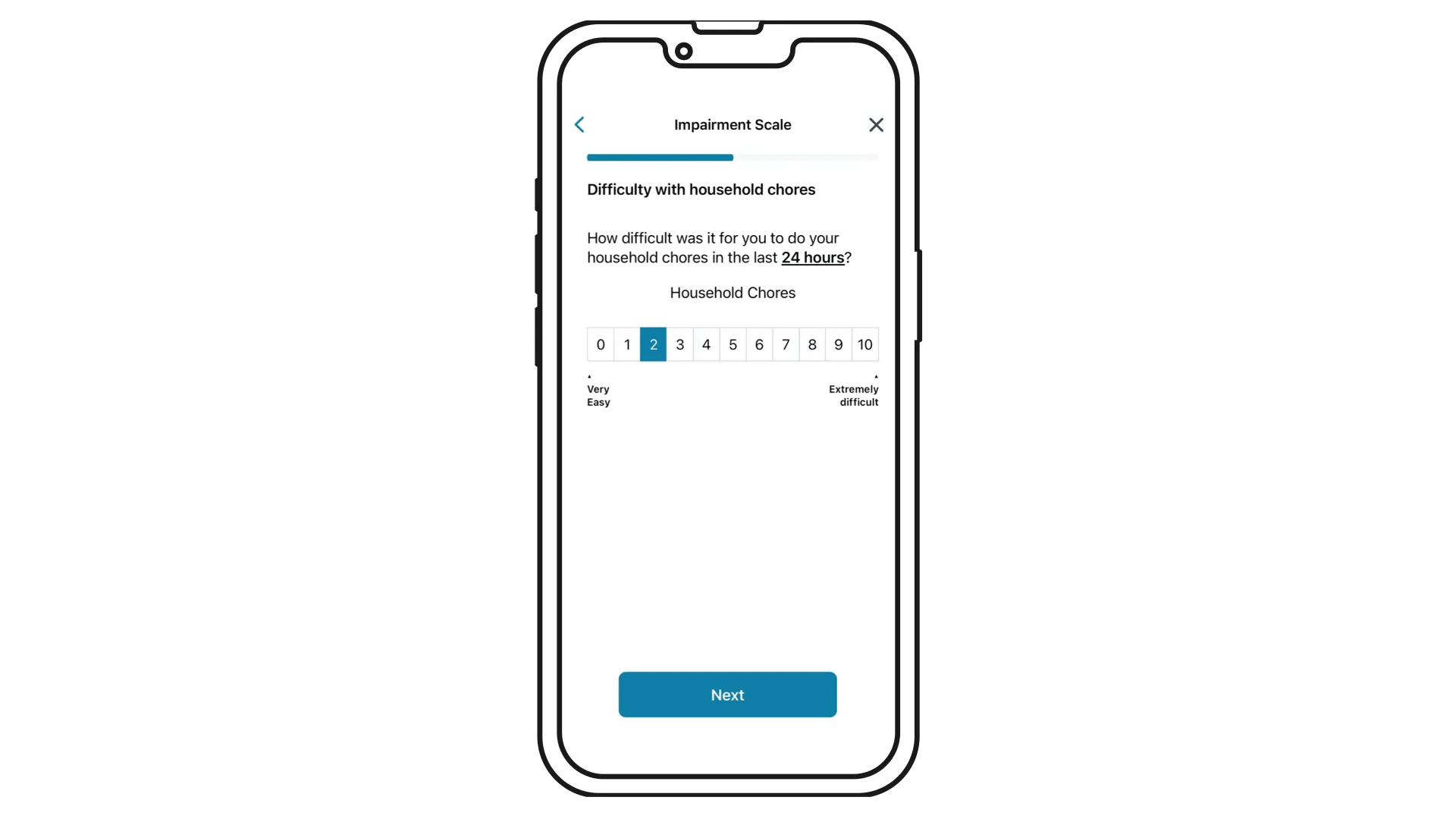
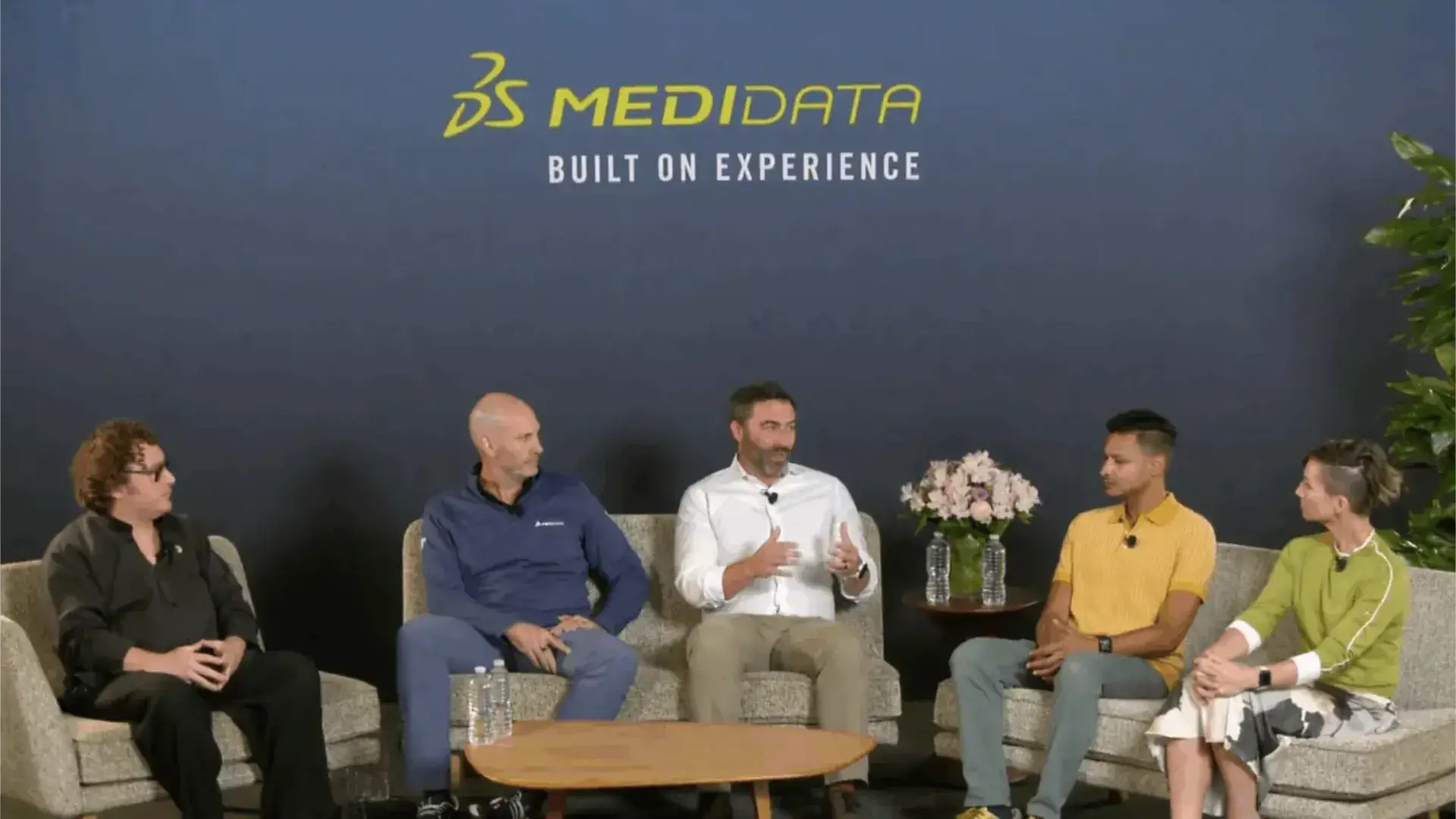
Video transcript: Thanks so much. Hi everyone and welcome and thank you for joining us today at Patients, Pipeline and Promise Software Enhanced Drugs. Software enhanced drugs are redefining patient care. They strive to deliver better patient experiences and outcomes and they are opening new pipelines of opportunity that allow forward looking industry leaders to differentiate their portfolios. By joining us today, you can be among the first to understand how to implement this transformative approach. For our discussion today, we'll first hear from Anthony Costello, Medidata's CEO and David Klein, Qlik Therapeutics founder and CEO. We're going to discuss why now is the time to embrace software enhanced drugs. A little bit later we'll be joined by some additional subject matter experts who are in the commercial and R and D functions and they'll be sharing their insights and outlining the benefits of how that applies to very specific teams. Lastly, to wrap up, the group will take your questions. So again, make sure you're getting those questions in. So let's get things started. Today we're going to start off with this idea that our industry has seen a rapid rise in the evolution of companion apps and digital therapeutics and now software enhanced drugs. Momentum is high. And David, I'd love for you to set the scene for us. Why is now the time for early movers and innovators to really be thinking about how to use these and to reap the benefits? Sure. And thanks for having me, the Fierce Pharma and Metadata for collaborating on this, really appreciate it. Just want to say that this is a live webinar, so everyone knows. I think we can prove it by reporting some news. Maybe Hulk Hogan just passed away about an hour ago, so you know that we're live for sure. So and thanks again for everyone who's joining us here. We're super excited about today's webinar. And, yeah, I mean, to Lisa's point, we we do believe that the that the time is now. We think that technology and regulations and where AI is frankly bringing technology has advanced to the point where it's been really clear now since the first development of digital therapeutics that software can drive clinical outcomes in diseases. Right? So that's something that's pretty broadly accepted now, and believe me, it took a long time to actually get to that point. But there's been enough studies and peer reviewed publications really demonstrating that software can drive outcomes in a very wide variety of different therapeutic areas. And if you look at what's happened with the regulators relatively recently was the release of the prescription drug use related software draft guidance from FDA, which really clarifies that if you can demonstrate additional clinically meaningful benefit, if the software can the software is a medical device, to be specific that that benefit can actually be incorporated directly into a drug label, right? So this is kind of a moment we've been waiting for for a long time. I mean, ever since founding our company, we certainly believe that ultimately software and drugs would be combined for safer and more efficacious treatments, and that moment has really come. And I believe in the coming months and years, you're going to start to see software combined with drugs in really one single prescription, and that's going to benefit all stakeholders from the manufacturers to the patients to the providers who can provide better care, to the payers who can, you know, see if their treatments are working. So, really, you know, there's that magic in this space too where so often innovation can kind of kill one sector or be negative for another one. This is really a kind of paradigm shift in medicine that benefits everybody. Yeah, it's additive. It's not replacing. Exactly. Yeah. Anything to add to that, Anthony? No, think David's the expert in this space, and certainly what Click Therapeutics has already accomplished as a startup has started to prove this territory. And as David mentioned, it's really the clarification from the FDA in this guidance that is opening the door for this. Yeah, that's causing inflection point. Yeah, yeah. It's one thing to have companion apps. We've been in an industry that's utilized companion apps of various types for a long time. But going from a companion app, almost a nice to have way of giving the patient a patient centric tool that they can use, or something even that measures a little bit of adherence in the commercial space, is one thing. But at the point that you're changing your drug label based on the app and I think David didn't say it here, but he tells me all the time. It's like, the app shows clinical benefit. The drug shows clinical benefit. But the real vision behind Peders, or the prescription drug use guidance, is that these two things in combination are better than either one independently, right? So you're really getting a true one plus one equals three benefit in the label on top of all the other things that we always hoped for from companion apps. I think that's why we're seeing such a turning point in the market right now. Exciting. So David, I've heard you talk a lot and I know people can imagine how these can benefit cognitive based disease states. But you've said before that there really is applicability across all therapeutic areas. Can you talk a little bit more about that and maybe use some specific examples because I think in terms of getting folks excited not if they're, you know, maybe not in the CNS space or cognitive space, like how and why should they be excited about this? Sure, and I think, yeah, this goes well beyond CNS, and, you know, has actually begun to publish, you know, some of our innovations in other areas. For example, we actually just presented at ASCO on our early digital therapeutic in breast cancer patients and showed that a randomized controlled trial demonstrated significant benefit in fatigue, pain, and benefit in depression and anxiety and kind of those type of symptoms related to oncology. But really, any disease with an underlying neurological or behavioral component. And if you look at I mean, really, almost every disease has a component like that. If you look at, you know, even adherence to medications, although that's never really a primary target, that's certainly a behavioral issue. So, we have active programs in whether it's dermatology and, you know, from atopic dermatitis to psoriasis or, you know, I think one of the earliest spaces to probably be fully digitized will be the GLP space, right? You're looking at an area where the drugs are already essentially prescribed as adjuncts to behavior interventions. So many of these areas are kind of ripe for this combination. It would benefit everyone and we've now demonstrated clinically meaningful benefit in a very wide variety of different therapeutic areas. Yeah. I mean, I can see why Medidata has been excited to work this partnership. It seems like you know the world is open to us at this point and anyone that we've been working with can absolutely benefit from it. That's exciting. So can we talk a bit more you just mentioned the clinical process associated with the therapy. As you've said the key differentiator really is clinically significant outcomes that allow us to show that differentiation and I think that's a key reason like I said why the partnership between Medidata and the work that we have been doing from patient engagement and helping companies run clinical trials becomes a key factor in this. The better we can show that the trials are presenting these outcomes, the more beneficial we can bring this to market. So how do you see that as you're framing it up in terms of both partnership and opportunity? Sure. Yeah. I mean, this is really the core strategy behind the partnership to begin with, right? Medidata. And I'll say in general, I think the clinical trials industry for the last several years has really embraced patient centricity finally after years of lip service. We really do want to become more patient friendly in the clinical trials process, in the way we think about patient burden, in the way we design trials to be successful and to advance recruitment and burden management for patients. But the kind of apps that Click is building have to be patient friendly from the get go. You're talking about apps that need to be used in the commercial setting really because the patient agrees to use them and can use them and likes using them, and they match the other kinds of technologies patients use in their real lives. And you sort of have to make it accessible in that space a little bit less than in clinical trials, where you're sort of forcing patients to follow a protocol. And I think the genesis of our relationship together is in a world where you're moving beyond what companion apps have done, and you're really moving to proving the value of the app in a clinical trial, sort of the ballgame becomes how quickly can you move these things through clinical development. And that's really where, you know, where metadata met click and decided, how can we help this market accelerate through this next phase of innovation Yeah. As fast as possible? You've got to have the innovative app. You've got to have the clinical trial process. You've got to have global reach. You've got to have a wide swath of different kind of customers, enterprise clients, the CRO market, the mid market. Everybody's interested in digital therapeutics. So can we sort of work together to plug these very innovative, new digital therapeutics straight into a clinical trial process and come out the other side as fast as possible with something that has gone through the rigor of clinical development to show real benefit. And we think that we've got the right partnership to do that. What we're learning from pharma is that they also recognize this as a race. Yeah. Right? Like in a world where every drug could be viewed by payers as advantageous if it has a digital therapeutic counterpart, it becomes a question of how fast are you going to make yourself more competitive by being the drug plus digital version of the drug in that competitive space. And in that world, everybody wants to hustle through the clinical research process as fast as they can, and we think that this partnership provides the best way to do that. Yeah. Yeah. I would agree. I mean, from our perspective, you know, we're a small company. We've got maybe one hundred plus people, mostly in New York, although we're expanding globally. We have infrastructure that we've been building from Asia to Europe, but it's obviously limited to kind of small company proportions. So if you look at a partnership like this for us, not only on the clinical side, right, but standardizing these processes so that we can do it quicker, cheaper, with a higher probability of success really than anyone else together in the clinical trials. But also having that global reach for us is really important. Whether it comes to marketing. I mean, look, I think we've been around a little over ten years. This might be our first webinar, for example. We've done a couple of them. Don't worry. Yeah. So, you you name it. I think that there's a tremendous amount of synergy there that we found. And, just to touch Anthony's point on payers and maybe circle back to the time being now, and don't get me wrong, think there is a growing handful of pharma that are pretty committed integrating digital in all of their drugs. Right? And we'll hopefully start to make our, you know, first few announcements around that thesis pretty soon. But if you look at what's happening to the world now, you're seeing this kind of shift almost from the therapeutic alliance that was once exclusively reserved for a physician and a patient. And that physician really and that patient, I think, should always have that alliance. But there is, you know, some shifting of that where people are, especially with the rise of AI, really increasingly looking at their technology from a kind of therapeutic alliance perspective. Right? And I think we're that's one thing that all of CLICS programs do right from the onset is kind of build and strengthen that therapeutic alliance with the patient. But this is going to happen one way or another, right? People are going to be going to their technology and, you know, for, you know, whether it's cardio advice or advice on brain health or really you name it, which makes it all the more important, I think, for kind of pharma to really get into this space in a pretty major way. But on top of that, as you look at the kind of payment systems, right, I mean, realistically, how far are we as a country and really as a world away from, you know, things like your shoes knowing if your GLP medicine is working, right, or mirror knowing if your dermatology medicine is working. I mean, that's right around the corner. That's not five years from now. And you can be sure that, you know, governments and insurers, you know, aren't gonna be you know, if if Nike knows if your drug is working, they're gonna wanna know too. Right? So this does get get ahead of that as well, and the real world evidence that we generate together is really a critical factor in all this. So at at one point, you know, you can really view it as as, frankly, better medicine that we're able to hopefully deliver to patients. But on the other side, it's really a kind of necessary component. As this world evolves so quickly, you are going to see, you know, drugs and, know, or heaven forbid competitors of your drug launch with technology and those, you know, technology powered drugs or as we call software enhanced medicine will have significant advantages over their competitors. Yeah. And the opening of the label expansion is a key part of, you know, what should be in company strategy, right? Yeah. Yeah. Yeah. And, you know, also I would encourage people, you know, people don't have to take our word for it. Right? You can go ask physicians. You can go ask payers. Bring TPPs and say, hey, if our drug added an app and also added these endpoints and strengthened our primary endpoint, would you be more likely to pay for it? Would you, for the payer, pay more for it or frankly not pay more for it, but, you know, enhance the formulary position of it? Right? And you'll start to see, as we are now, that it's not in many cases, it's not just incremental benefit for pharma. I mean, you're talking about a potentially substantial shift in prescribing patterns and payment models here. So, you know, it's a big space. Think we're starting to see digital enter into all of our daily lives, as we kind of might have said in the past. But CLIC, along with our partner Otsuka, had the first ever FDA cleared app as treatment for major depressive disorder symptoms. We just recently, and I think our CMO will join us shortly to talk about, Click just recently had the first ever app approved for the or FDA authorized for the preventive treatment of episodic migraine in adults, right? And these are significant diseases. These are things that people are going to start to see, if you haven't already, Friends or family members go into a physician's office, and they're going to be prescribed software to treat that disease, whether it's software alone or, frankly, software combined with drugs, a very likely scenario, that paradigm shift is happening and it's not going to be niche. It's going to be broadly seen and broadly accepted. So for the audience, I mean we've definitely come in with an assumption that you have some background in this and if you don't we've got some takeaways that you will get at the end of the webinar that are really going to be able to help bring up your baseline here but what I want to make sure that we also leave folks with is some action. So you know I'm convinced you guys have convinced me, I'm a pharma executive, you have me sold, I'm ready to get started, what are the really tangible items that I can take action on now? How do I take steps forward? What do I need to be thinking about? How do I engage with you? Like what are the next movements I should do to, like you said, this is we're at an inflection point, this is an exciting time, how do I engage? Yeah, sure. That's a great question and, you know, probably one that I don't talk about enough, so thanks for asking it. You know, look, generally, CLIC would be happy to look at a whole portfolio or at a drug and really propose just to demonstrate, you know, what our platform and Plus Metadata on the clinical side can do for that drug or that drug label. And, look, we've done quite a few of these analysis, and, you know, not everyone's great, right, because sometimes we talk to payers, providers, physicians, and we'll come back to the pharma company, and we'll say, you know what? We have, you know, good news and bad news. The kind of good news is we did a whole bunch of free work for you. The the the bad news is is, you know, the the outcomes we could drive on this, you know, while good, you know, providers really care about this other thing or they're looking forward to this new drug that they're going to prescribe no matter what or payers already feel like they pay way too much for this or, you know, any one of these things. But more often than not, we're seeing, you know, really successful formulas to kind of integrate these these drugs and software. So I would say, you know, reach out. Reach out to your metadata rep or reach out to bdclicktherapeutics dot com, and we are happy to, know, do these proposals and full workups, and they're, you know, really rigorous. Again, we talk to key opinion leaders. We talk to payers, and we really analyze drugs and what our platform could potentially do for it, and then we'll present it. So, it's really nothing to lose from kind of taking that step. Yeah. And I'll just add to that that baking this in at the beginning of a clinical development program really matters, So in a perfect world here, what we would do is design an SE program that includes the protocol and the way we're going to approach sites together and the way we're going to focus on recruitment. These arms in Click Therapeutics trials include actually the true innovative app, and also a sham arm with a sham app. A lot of people don't understand that, but very much like a drug trial, there's a control arm in a click therapeutic study where patients have the real sham version of the app. So you can really tease apart whether you're getting a true clinical benefit from the digital therapeutics. Because we're already working with so many different customers and so many trials at Medidata, bringing the click arm and the click design and the click clinical development program together from the start is really the way to do this. And that's how we're working with the customers that have approached us already in this partnership. Yeah, and I think it's fantastic what you both touch on. Our customers, you don't have to know how to do this yourself. You're bringing the subject matter expertise from the software enhanced drug side. We can bring the trial setup execution expertise and between that partnership we can really help folks take advantage of you know it's time to go. That's great. Okay, so now we're gonna get to bring in some additional subject matter experts. I'm going to introduce Tony McDermott, CLIC's Vice President of Global Commercial Strategy. Come on over and also Doctor. Shaheen Lakin, Chief Medical Officer for CLIC. Welcome both of you. Thank you. All right so Tony, why don't you kick us off here. How are you seeing commercial teams leveraging the work that you all are doing at Click? Yeah Lisa, I'll actually say I'm gonna take the lens from Click Therapeutics perspective but one of the things that David did was he brought in people that had a lot of pharma experience to lead our commercial side so what I'll do is take you through ultimately the things that I think are important for pharma to think about when they're thinking about whether they should or shouldn't onboard a digital therapeutic. So if I think about like some of the key things that I would focus on from a farmer's perspective there are limitations as Anthony and David mentioned already with the label that the pharma companies can prescribe to or that could that they can speak to In terms of the digital therapeutics one of the benefits that we see is it gives you the opportunity to expand outside of what you typically would see with your primary or secondary endpoints. Specifically you can tailor that treatment to that specific patient with where they're at with their treatment journey and where they want to evolve to in terms of their endpoints and so a great example is one of the things that David has has pushed us to focus on with the OUD space or opioid use disorder space so we do know that there are limitations there with that therapeutic area being very cyclical in nature and so one of our theories is and one of the things that we're testing is in the OUD space is the opportunity to enhance background buprenorphine based therapy and focus on things that are underlying the condition such as cravings mitigation and relapses and so if you think about from a payer perspective one of the benefits you could get is reduced hospitalizations so it addresses your indirect costs and it also could have that impact over to comorbid conditions as well so it's a true value prop that we see in that particular area. The other thing that we take a look at is the ability to robust or generate more robust real world data so there are limitations right now and Shaheen will go into it as well with understanding what's available there from a patient You're typically getting labs, you're getting some information that comes into an EMR or EHR. With the digital therapeutic that's constantly on board with the patient. So what we do see is we're able to capture more real time data on that patient and if there's the need for the HCP to intervene in therapy they have that opportunity to see that data, changes to where that patient's at and then ultimately enhance that long term sustainability the product and so I think that has value from a farmer perspective, payer perspective, mostly a patient perspective as well. The other thing is we see the opportunity with simplifying complex treatment regimens. This was one where I think it came up more organically lately where we've had companies in the rare disease space wanting to understand how do I identify patients that could potentially be relevant for my therapy and then ultimately what are the ways that I could then get them on therapy and keep them controlled from symptom migration right and so what we're seeing is with the focus on digital therapeutics you have the ability to identify the right patient for the right treatment get them earlier in the treatment cascade potentially and keep them on that product for longer which could reduce exacerbation in symptoms it would reduce your medical costs and potentially reduce indirect costs you know that would be associated with things like absenteeism, presenteeism, disability those types of things. The other area that we see is there's in these increasingly competitive therapy areas they provide a valuable value proposition so coming from before I joined click I worked in a company that focused in opioid or in the obesity space what I would say is the innovation that's happened in the GLP one space and obesity space is rapid So what we've got some questions on from particular payers or from pharma has been, I brought a product to market through clinical trials, and Shaheen will be able to tell you how long these clinical trials take. And I thought the product was going to be innovative. But then when I got it to that critical trial no longer was it something that was was unique so I'll give you a real example in this space so for the longest time we focused on actual mean weight loss that was the primary goal in obesity now what we're seeing is the focus is on lean muscle mass retention so those products that did not have that in their MOA are now at a loss where these products that are amylin derivatives are ready to roll when it comes to the lean muscle mass retention so with a digital therapeutic one of the things that we're testing is by having that digital asset can we focus on that lean muscle mass retention and like David had mentioned GLP-1s are adjunctive to lifestyle modifications so there's the ability for the prescription digital therapeutic to then address those issues with lean muscle mass retention then the GLP-one can actually focus on that weight reduction so you're focusing on this whole halo of cardiometabolic benefits and then the last thing that I'll focus on here is the data collection capabilities are unparalleled when it comes to you know what's happening with with digital therapeutics here so you know we do have the opportunity to bring in insights in patient behavior we can use that to refine the product because if you think about with the digital therapeutic it's not you put it out there and it said it and forget it you're looking at version one that comes out so what we can do is we can iterate with science and with our product teams to make sure that we're refining to the benefits or the needs that that patient has at that particular time and then we're iterating it as we continue to move forward Those things are things that we are very confident in what we can do with the FDA. We're very well trained there and we can move those things forward. And then the last thing I would say, Anthony touched on this a little bit and so did David, is we're focusing on things end to end in the treatment journey so we could focus on things from a clinical trial perspective all the way through to lifecycle management and where we're getting more questions right now is for products that are around let's say three to five years from patent expiry what can they do to to increase that runway of the product and the uniqueness of that product and so we are having questions come in from what can you do to help us mitigate loss of exclusivity and so that's an area that we commonly feel like digital therapeutics can help to thwart some of that generic competition especially in complex conditions. Okay, fantastic. Yeah, it's I mean it's such an exciting space so you know now that we've heard from Tony and we've heard a little bit more about software enhanced drugs, how they benefit pharma, how it benefits commercial, I want to talk a little bit more about what makes them such a differentiator when it comes to patient outcomes. Think we've all touched on it but Shaheen can you help us understand a little bit more about how we bridge that gap between what is available patient outcomes and really fill that story in a bit more. Absolutely Lisa, so thank you for having me I'll try to explain basically the sciences or the gut behind these software enhanced solutions Cause right now it could be a bit of a black box. Yeah. But then also the evidence, Cause the science is nothing, it's theoretical if you're not generating the data. And then the last is impact. Think you've impact from a variety of stakeholders. I'll try to consolidate all of So first and foremost, this is beyond a promise. We already have rich scientific and clinical rigorous validation behind everything that we do. And last but not least, because this sits in the pocket of patients, they become very personal. They become very human. So I want to dispel that myth. This is not a promise. This is a current reality, essentially. And maybe a bit about myself. So I'm a neurologist and a pain management specialist. I was a former dean of a medical school that I helped found and was the department chair. And I brought a variety of first in class solutions to the hands of patients and to the market. But beyond all that, I'm a clinician. And sitting across from me have been a lot of patients, maybe thousands of patients. And I hear their stories, Well, I've exhausted treatment options. Right? I feel disempowered in my treatment journey. Is this as good as it gets? Yeah. Essentially. I've taken that perspective and we've taken that perspective at click and applied it to the build of our products. So let's start off with the science. So first, the S and SE drugs, the software, is not just another app. These are digital medicines that are intentionally designed to hit mechanisms, mechanisms that work on the brain, that work on physiology, that work on function, that work across the whole domains of human experience. Much like molecules work on receptors and targets and have an action, right? So there's a hard science behind all of this. Second, when we started, we started off with software only based solutions. And David already spoke to a few of those which have made the headlines. Patients are actually benefiting from it right now. We have the first FDA authorized treatment, adjunctive treatment for major depressive disorder. We just got approval earlier this year, right, for episodic migraine as an adjunctive preventative migraine medication. These produced adjunctive clinical benefit on their own in the most rigorous trials. This is on top of background medications, which we do not trust. And here's the real kicker, there was no safety burden added on. Wow. Obviously no drug drug related interactions. In fact, many of our labels have no contraindications. Used to be the day where I'd say, if you're pregnant, if you have hepatic renal disease, if you're too old, you can't use the solution. Guess what? We don't have those, essentially. Other than your screen time's gonna go up. Oh, you got it, you got it, but in a healthy way. Right. Essentially. So when you look at advances when it comes to digital medicine as software, plus a lot of the regulatory advances that we discussed, the Peter's, right? Which is really a glimpse into the brain of how the FDA wants to regulate software, which it does, and it's very clearly defined in guidance. If you combine those together, what are SE drugs? These are true integrated software plus drug combinations that are single prescription, that are co prescribed, right, and co packaged, and that the user just experiences. In fact, before a patient leaves the doctor's office, or in this case, a virtual visit, you almost have guaranteed knowledge that they're engaging in treatment. And you don't have that with traditional medicine. Sure, sure. Now, I'm really excited about the partnership with Medidata, because what we are building are closed loop therapeutics. And Tony, you were alluding to this, right? The rich data, let alone the outcomes. It's this continuous monitoring of data. It could be physiological, behavioral data. It could be contextual data. And let me give you some examples. Yeah. Your smartphone knows if you're physically active or sedentary. Right? Using a lot of the sensors on the smartphone, we know your heart rate, heart rate variability. We know the time of day that you engage the smartphone. If you correlate all that information together and triangulate it with outcomes, then you could start modulating not just the digital therapy, but the drug therapy as well. And that's called a closed loop therapeutic. Why I'm so excited about this? Because there's no additional burden. In fact, you're taking away burden from the healthcare system, providers, doctors, which are pretty much already at saturation at the Last is, I talked about making this into a hard science. Well we invented digital pharmacology. I have a equivalent of the PKPD, clinical pharmacology metrics published out there, and the building blocks, what's absorption, what's excretion, believe it or not, for a digital asset. So we applied all of that, and then built a therapeutic platform, which is growing day in and day out. And this therapeutic platform allows us to very quickly develop solutions for almost all diseases. And what I'm talking about is mechanisms of actions. These mechanisms could amplify the effect of drug, for example, in weight loss, lean muscle mass preservation, in hemoglobin A1C reduction. They could actually be independently efficacious. A lot of ours are negative symptoms of schizophrenia, in reducing monthly migraine days in migraine. They can mitigate against side effects. Now, is a hard one to understand, right? How can a digital therapeutics do But you can actually mitigate against the GI intolerance, some of the nausea, vomiting, diarrhea based on dietary changes. It could also mitigate against some of the cognitive side effects, sedation, fatigue, which is plaguing a lot of conditions and medications. Last but not least, when you combine all of that, it actually could help with real world functioning. Returning We're not just trying to treat biology, we're treating humans, right? And humans are best when they are functioning well at school, work, and social relationships. That's been the missing link, which I think the software enhanced drugs would actually encapsulate. Last is, I want to talk about outside of CNS. CNS, you probably face validity that we could hit psychiatric diseases. We have approved products for that, right? That you could hit neurological diseases, we have that too. But outside of that, think about immunology and oncology. There's a lot of drugs in development that have striking results on animal models, but they fail to translate to humans. Or early phase studies, but they fail to translate in phase three trials, right? Or well controlled studies, let's say you even got approval, but they fail to translate in the real world. Because not everything is about biology. In fact, everything between dosing is dependent on treatment success. We're talking about how you function at home, school, the environment, your adherence. And this is where, if you think about some of our solutions, we could bridge that gap. We could extend molecular efficacy into the real world using some of our technologies. Last but not least, I love what Anthony said about you have to engage these solutions, right? And I believe David touched on, you have to develop a trust or rapport therapeutic alliance. So we perfected that. We actually have a validated instrument, and we're calling it the Digital Working Alliance. And it's akin to when patients came to me, and I've been their provider, why do they follow my recommendations? Hey, take these medications, do these lifestyle modifications, go to these referrals, maybe, heck, get some surgery and procedures. It comes down to we have a mutual trust, rapport, bond. But even this other one, and it's often fractured in health care, We have a shared functional goal. Your goal is my goal. And if we break it down to a series of steps, you could reasonably achieve that goal. We managed to take that, which is traditionally done in face to face therapy, and package it into the very first time you open one of our digital therapeutics. And we build that digital working alliance and trust, and we carry it through. Why is it important? All studies show if you don't establish this alliance, everything else fails. It's not just about engagement and adherence. You don't get the outcomes that you want, and we intentionally build our solutions for that. This is phenomenal. I mean, we're clearly changing the game of of what's possible, and it's a really exciting partnership. Does anyone wanna add to Shaheen's comments? You know, I'll just add a little bit. I mean, just to piggyback on what Shaheen is talking about, as you talk about, you know, a technology and one that's, you know, essentially part of the drug treatment, building a therapeutic alliance, you know, you don't have to go back very far, right, until the days of COVID when, you know, all of a sudden, for the first time, at least in my memory, people were talking about, well, yeah, I took the Pfizer shot or I took the Moderna shot. Right? You're all of a sudden hearing these pharma companies' names and brands, and it's being you know, it's becoming important in a consumer centric way that it never has been, at least that I can remember in my lifetime. So, I think that that's the area that we're headed to, that patients getting drugs and really judging them by their experience with that drug. And it's not just going to be a molecule alone. You're seeing all these other tangential services and this kind of wheel around a drug form already from whether it be Amazon or Google or tech companies. And that patient experience will be critical to how a pharma is viewed, right? And I think that the companies who move early and who move strong in this space will be essentially viewed as the kind of, in many respects, how people view Apple, right? You could be the kind of apple of these drugs, and patients love the experience, and hence, they also love the drug, which is helping them get better. Or you'll have some companies, I think, you know, for better or worse, become the kind of BlackBerrys of this space. But I think and no offense to anyone who still has a BlackBerry, if that's even possible. But I truly think that that's where we're headed, that therapeutic alliance has to come with an engaging and really, I'd say, beautiful experience for the patient. And, you know, people often talk about drug adherence in this way, and when click does, you know, we're not just talking about a reminder that says, Hey, remember to take your medicine, right? When somebody's treatment becomes a journey, there's inherent components of that that are already driving a much, much more engaged patient to be more engaged and interested and adherent to that treatment. So the benefits are really widespread from all these different therapeutic areas, but that go all the way through persistence on treatment ultimately into outcomes. David, there's one thing to add here and it's one of the things that from my experience in pharma and the twenty plus career I spent half of my experience in pharma, there was two areas that when I was looking at Cliq that drove me to come to this company. Number one, working in therapeutic areas where it's almost impossible to get to your provider. You're looking at maybe three to six month wait list periods, so in that type of area you want to make sure that that patient is constantly in contact and having their symptoms or their underlying condition managed, right? And so the role of digital can essentially play that and then if you think about some of these more unique and innovative pharma companies you're looking at therapy that used to be daily and now you're looking at potentially monthly every six months or yearly. What's happening with that patient and how are they experiencing that treatment in that time period between them seeing providers, right? And so especially in long acting injectable therapies, the digital element can actually make sure that patient is constantly in contact. If there's issues, it's something where they have that support system, they can actually get involved with the provider, and it actually helps to enhance more of that holistic patient care. And so those are a couple of areas when I think about from a pharma perspective, are ways to take that innovative therapy and then add on to it and have it more patient focused. Yeah, we're opening up that black box of time between what those engagements look like and I loved what you touched on in terms of the brand awareness like a patient and their treatment is already a personal relationship but we're really turning that up to eleven here with the ongoing engagement and their ability to really understand and engage more deeply with what's happening with their treatment. Okay, so you're off the hot seat for a second. We are ready to go to your questions now so hopefully you've been adding some in. I'm kind of watching them come in. Don't worry I want you to stay engaged because even if we don't have time to get to your question we will do follow-up. If you give us a question and we don't get to it live we're gonna do some callbacks to the attendees and so we'll get make sure that you get your question answered. But the team's queuing them up for me and I think the first question here is gonna be for you David. So where do you envision the most significant growth and impact of software enhanced drugs in let's say the next three to five years and how will the relationship between Medidata and Qlik ensure that pharma companies are at the forefront of that innovation? Yeah. No. Thanks. And look, just for the record, you know, I've been, I think, largely kind of accurate in some of my theses as to where the industry's headed, but I never really mastered the kind of time from now aspect of that. So, you know, when we first founded Click, I thought, for example, you know, we would just tell pharma about this idea of an app driving clinical outcomes and they'd go nuts and put up portraits and statues of me and this kind of thing, you know, and that still hasn't happened. So, you know, I'll try to be a soothsayer here, but to some degree, the future's a lot more cloudy now. Right? So, you know, when when when you start to talk three to five years from now, with AI moving as fast as it is, and, you know, I I I would I would hope, you know, everyone here and and on the webinar really fully gets us. Look, I mean, in three to five years, in less than that, your your your dog is gonna be able to talk to you. Right? I mean, so this world is moving quickly. And it becomes increasingly hard to really try to predict the future in three to five years. I'll say a couple things for sure. Right? The whole health care landscape will essentially be put in a washing machine and kind of come out differently. Right? This is I think that we're and I hate talking about this because people have been talking about value based models forever since I can remember, and it's never come to fruition and or in a meaningful way that people thought it would. I think it just has to now. I think you are going to see a tipping point in value based models because these data will just be everywhere. Your bed is going to know what your heart rate is, how much sleep you got, if your GLP is working, and, you know, on and on and on. So and you're pay and and the people paying for those MADS are simply going to need to know. So, you know, I think you're going to see a real paradigm shift here. I think, one of the spaces that'll go pretty quickly is this kind of obesity weight loss GLP space. Think there's just so many critical behavioral components to that. If everyone on those medications, for example, just had the data, right, knew, oh, wait, I'm losing all this muscle mass, right? That's a scary thing, and that'll get people changing their behavior. And then if you can build behavioral change and even to some extent cognitive modification around these data, you could have something really big, really important. I think you're starting to see people artificially surround themselves with unregulated technologies and calorie counters and this and that. But there's a disconnect. Pharma can't really market that. I take picture of my food. It's got four hundred calories and eighty carbs. How do I know that's real? Where's my data going? You you know? What am I using that for? Right? There's a there's there's a reason that, you know, these regulations aren't just for regulation's sake. It's also ensuring real accuracy and that these data are actioned appropriately. So I'll say that you're certainly going to see the cardiometabolic space be, know, I'd say almost fully digitized in the relatively near future. If you look at migraine, for example, look, the newer drugs in this space, the CGRPs, I mean, they've been great. They've helped a lot of people. But really, you'll almost never meet a migraineur who is like, yeah, I have episodic migraines, but I'm good. My meds fully help me. There's room to be helped in that space, which we've now demonstrated, maybe Shaheen will take you through folks, you know, some of those clinical data later. But there's, in almost all of these areas, right, you're not talking about full clinical cures of these diseases. These are chronic conditions and diseases that can almost always use more help, and especially when it comes with no safety issues. And the kind of interesting part of this to me, right, is that if, you know, we had some patented molecule, right, that can be, you know, added to almost any compound to, you know, improve efficacy and have no safety issues at all, You know, I I don't even think know? We wouldn't be hesitating. Yeah. I I don't know if I'd if I'd be on this webinar. I'd you you know, you know, cruising around the Yeah. And but but that really is what we're talking about. About. We are talking about a kind of revolution in medicine that that's important, that's strong, and that it's a great equalizer in access. I mean, it's not like you can just walk in and, oh, you have insomnia, and you go see a sleep doctor. Right? How many sleep doctors? I mean, I don't even think wealthy people can see sleep doctors. I mean, you know, let alone people in suburban or rural areas. I think there's entire states without sleep doctors. Right? And, you know, that's not just relegated to sleep. That's in whether it's headache medicine or so many of these different areas, right, don't have the same level of access and kind of care that, you know, I think many of us or some of us have kind of become accustomed to, and even that is often not enough, right? So there's a tremendous amount of room for growth in this space. I think in, you know, to kind of get back to the core of the question in in three to five years, look, part of the rationale between our partnership and and metadata is and and it's kind of Anthony alluded to, right now, a lot of our projects are around drugs that might be coming off label or already commercialized drugs that are losing ground to their competitors and could expand those labels, I think ultimately we'll see a pretty significant shift of this work into the clinical development space. It'll be a no brainer, not an option, that you're going to have a digital version, essentially, of that drug. It doesn't you know, in fact, I could probably make a reasonable argument that including a digital program in your clinical development pathway not just gives you potentially more commercial success from market share perspective and all these metrics that everyone's constantly measuring, but I would argue that it gives your whole program a higher probability of technical and regulatory success. And these timelines and the cost, we're talking about relatively negligible compared to the overall cost of these drugs to develop. So that partnership with Metadata Metadata is in, I don't know, ten thousand, eight thousand clinical trials as we speak. There are technologies involved in, I think, seventy plus percent of all oncology drug approvals, all approvals, and so on and so forth. So we want to get to that point, we are going to get to that point, and we're working towards it, where it's just standardized, you know, where we're kind of integrating these into all clinical development plans. And it's for the good of all of humankind. So I think it's an exciting time to be alive. Don't know what three or five years look like. We won't hold you to three to five. But tell your dog I said hi. Yeah, yeah. Awesome. Okay so now I think we're gonna take one to Anthony. So Anthony with the increasing focus on patient centered care models essentially by every stakeholder in healthcare how do software enhanced drugs provide a more personalized and engaging experience for patients ultimately driving better adherence and treatment outcomes? I know that the entire question hits right against what you've always been passionate about. Yeah, I mean we touched on this a little bit earlier too. I'm glad the audience is picking up on this. And like I said before, I think we finally, as an industry, are adopting and really believing in the value of designing the right kind of trials to be successful for patients. And David talked a lot about this. A world where every drug has a digital counterpart, and every one of those digital drug combinations have to go through a clinical research study, with the whole goal being that you drive better adherence and better outcomes post clinical research in the commercial state, it really makes imminent sense that you build these things in the clinical trial space. You add arms. You take a traditional drug arm, you add a digital therapeutic arm. That digital therapeutic arm has a control sham therapeutic arm. It all fits in the regular process that we follow with pharma to run a clinical development program today. But it's focused on the patient from the beginning, and I think we've done a good job talking about all the value that it brings to patients to have a more engaging experience. But we're also creating a completely new type of Think of it as a new type of real world evidence, of real world data that just never existed before. Shaheen talked about some of the things that we know from just the way you're moving around with your watch or your phone or your ring. But think about the way that we can start to approximate adherence. We can start to understand click has a number of patents, for example, that nobody's touched on today, but this is an important part of their story. They've got a number of patents that do things like learn from the way the patient utilizes the app so that we can communicate better with that patient as the AI is picking up their trends. How do we help them become more adherent? How do we help them help us learn faster so that we can feed those learnings back into future versions of the app? Or even theoretically, back to a pharma company who wants to further develop that molecule and find a better way to label that molecule, for example. So in all of these ways, if we're patient centric in the way the trial's designed, and we design that trial to be successful, there's a very good chance that we're going to end up with a much more patient centered digital therapeutic for the commercial space. And if we do that, we're all going to get a whole new classification of real world data that I think we desperately need if we want to create an experience that puts pharma at the center of the patient health care journey, and not just leaving clinical trials as this piece of health care journey or maybe a health option for patients, but really part of more of their lifelong engagement with pharmacy. And real world data of higher quality that's targeted towards exactly what we're trying to look at and really specific in that direction. Fantastic. Okay we've got a little more time so Shaheen next one's coming your way. Given the evolving regulatory landscape particularly with the FDA's guidance on Peters, what are the primary motivators or the challenges maybe that pharma companies in integrating software enhanced drugs into their development pipelines? And ideally how can this partnership help mitigate those challenges that they might face? Oh, it's a great question. I'll try to take one or two minutes to address such a bold topic here, especially in regulatory. Yeah, we have to recognize, I came from the pharma world, we're in the business of creating innovative medicine, right? And we take advantage of if the regulators open up the doors, open up the pathways, whether it was from the days, if you could remember, biologics was not a thing until the regulators created guidance. We didn't know about neutralizing antibodies, right? How to do durability testing, how to manufacture biologics until there was a regulation package around it. And that's why we place a lot of emphasis on combination regulation, AI use regulation in products, and then the Peter's guidance in these products. I don't think that pharma companies are going to go outside the core and now become the experts in software as a medical device training, right? I think you've touched upon it in the past. There's this deep expertise that's involved. It's quality management systems, it's technical expertise, product developers, engineers, data scientists, it's the clinical scientists who doesn't know, it's not necessarily knowledge of a chemical structure, it's the digital PK, PD structure. And then there's the whole validation process of it. How do you create a sham control? How do you blind, actually, if you have a sham and an active digital therapeutic that goes along it? How do you do the real world evidence collection? The beauty is, you don't have to create that machinery, just partner. Partner with us. With click and And I say that cheekily, but proof is in the pudding. We have multiple FDA cleared assets that are all digital. We have multiple breakthrough device designations granted by the agency. That's not just saying that the disease is debilitating. That's saying our technology is promising. So when I say proof is in the pudding, you just follow the regulatory trail there and come partner with us. Fantastic. Okay, we have time for one more if we keep it tight. So I think Tony we're gonna come to you for a last one. What specific proof points we talked about RWE so what specific proof points or RWE could you offer to demonstrate the return on investment, the ROI and the patient impact of software enhanced drugs that would encourage you know wider adoption across audience that we have here. David hit on this earlier and you know coming from the pharma side the term value based contracts and value based care is one where you roll your eyes at and it's normally if you're talking to someone in pharma it's something that's on their yearly goals they'll pen it but nothing will happen with it. Well I think we're in the space right now where cost growth in the US is just going up and it's not sustainable. So with the digital therapeutics we have the opportunity to capture a lot of that data that could work as a background engine for some of these value based contracts. So that's speaking US only. If we quickly pivot to outside of the US because we're speaking about global opportunities, there are full countries that don't have innovative therapies that are out there right now. So GLP-one space as an example. There are many countries in the EU and also in APAC that do not have access to GLP-one therapy so by having a digital therapeutic along board with any of the older medications you do have the opportunity to address patient care as those countries get up to speed and validate GLP-1s and understand what their opportunities are. So this could be an area where digital could help pave the way to provide value and then on the back end once innovation is adopted there you could have this this coupling like Anthony had talked about with having more of these software enhanced drugs as a full combo and that's where the click and medi data partnership can help make sure that we're formulating those trials in the right way. This has been really engaging, really informative and I hope generating urgency for the crowd. I mean I think you sense the passion that's coming across today and so what we really wanted to make sure is that you as an audience can be informed that you can understand what you can do next and that really you're seeing this as the opportunity that we see it as. So thank you so much for joining with us today. Fierce will be sending out the on demand recording link tomorrow. Make sure you download the PDFs like I said we're going bring you a lot of information so you can both take what you heard today get even further up to speed but grab them before you log off and our contact information is absolutely included with that. So you can always visit Medidata dot com slash click for more and have a great rest of your day. Thanks for joining us.