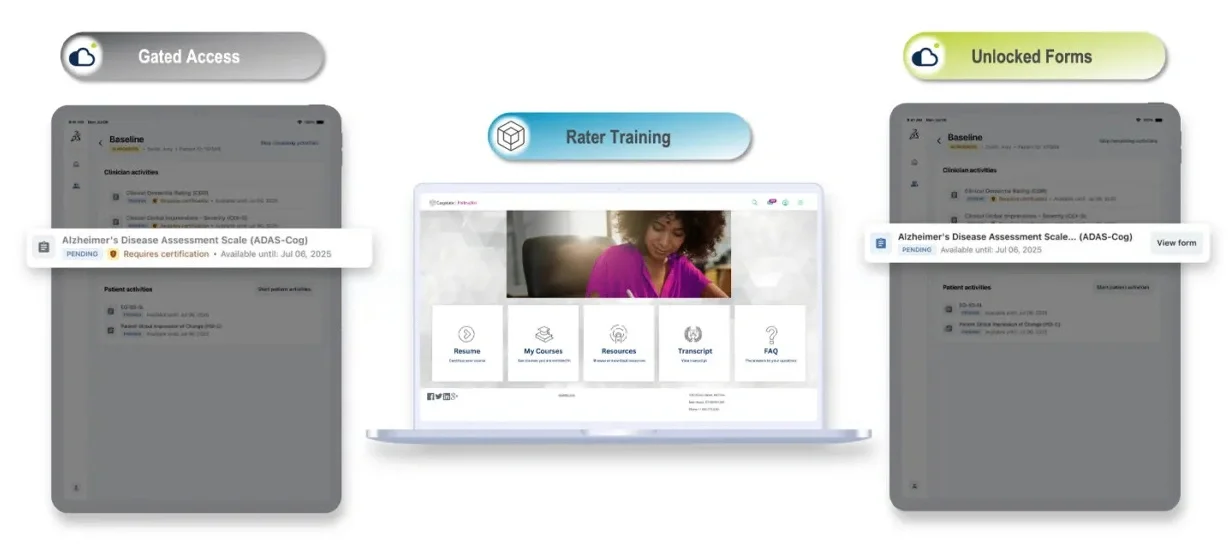
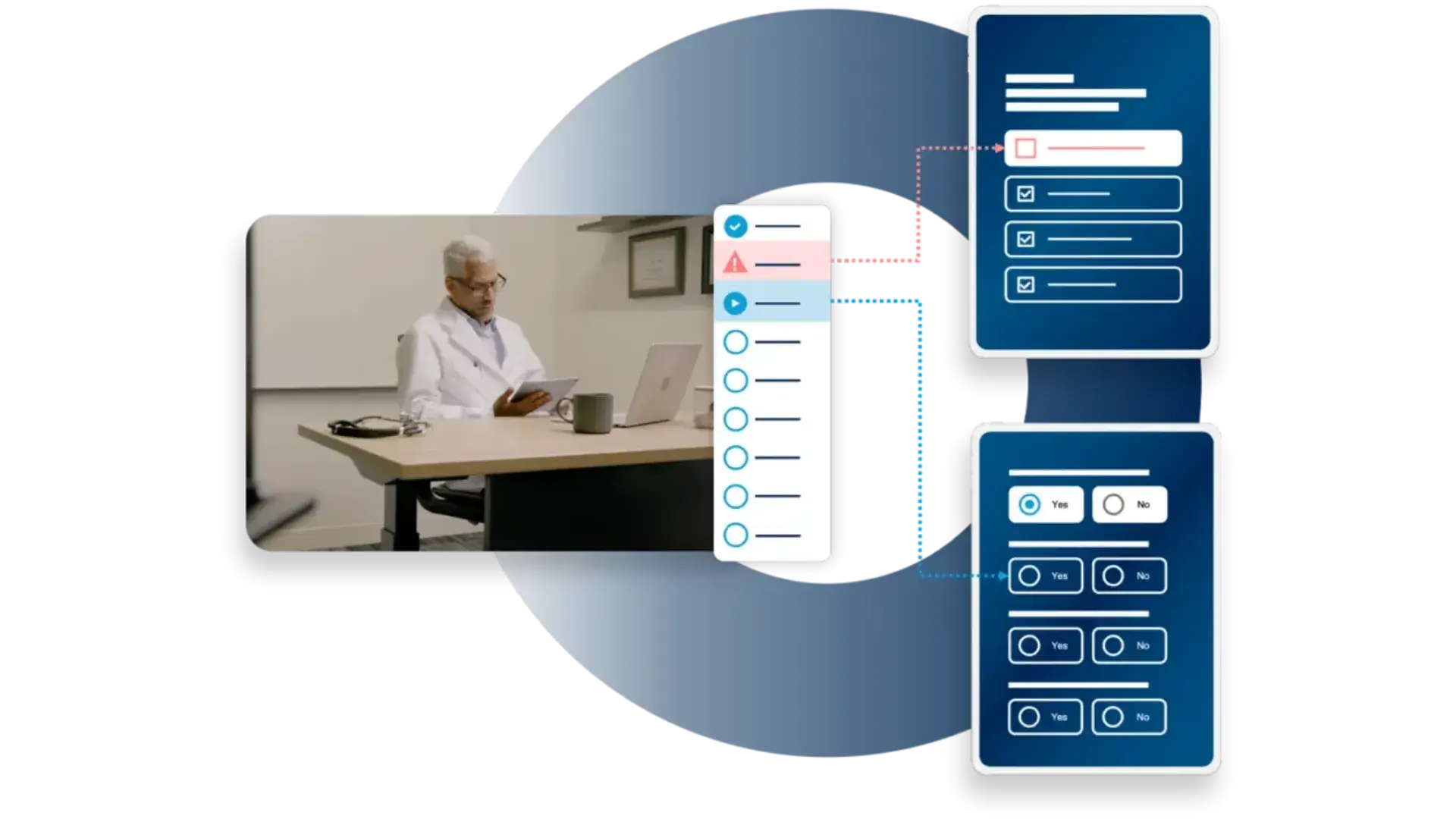
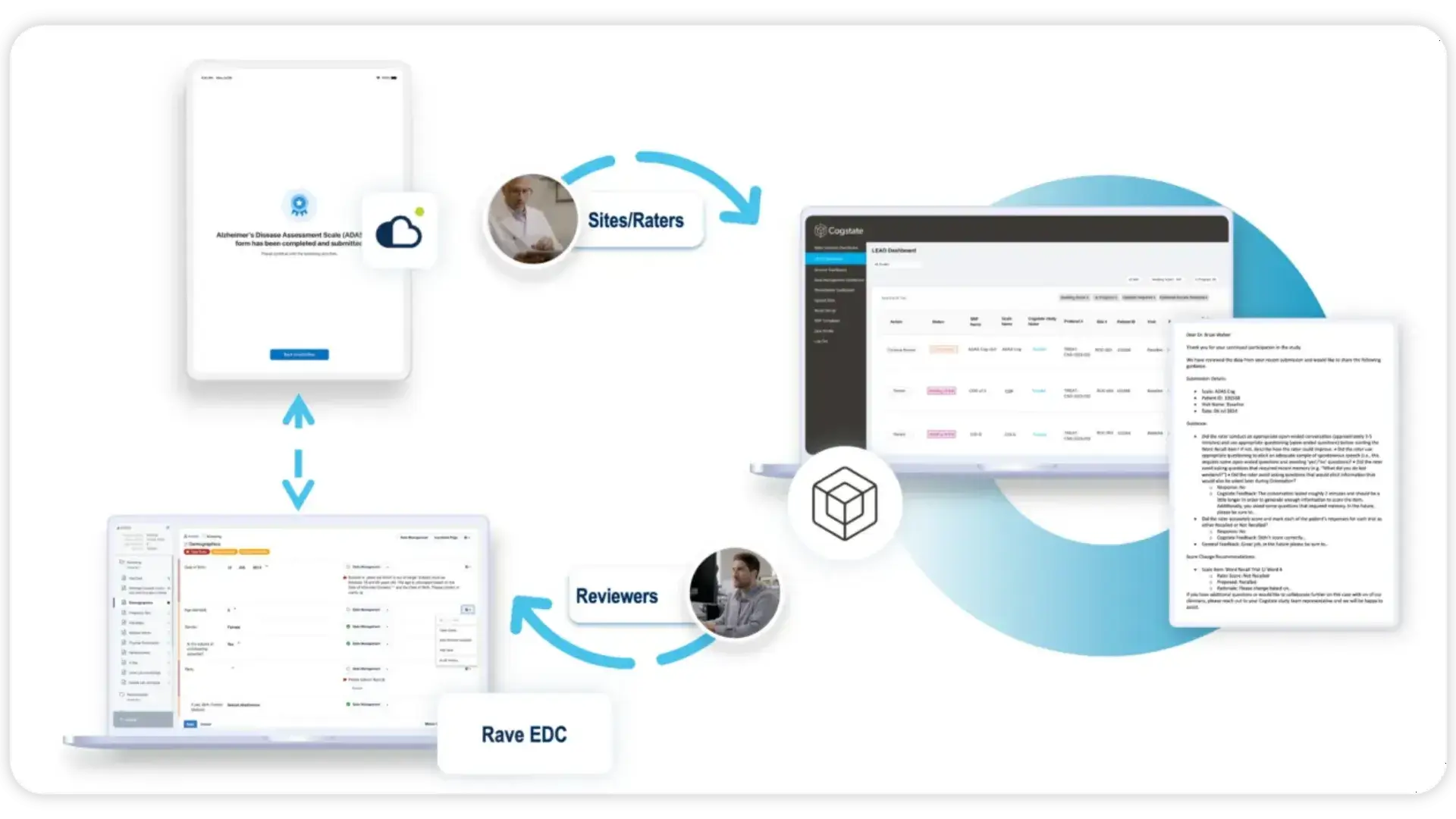
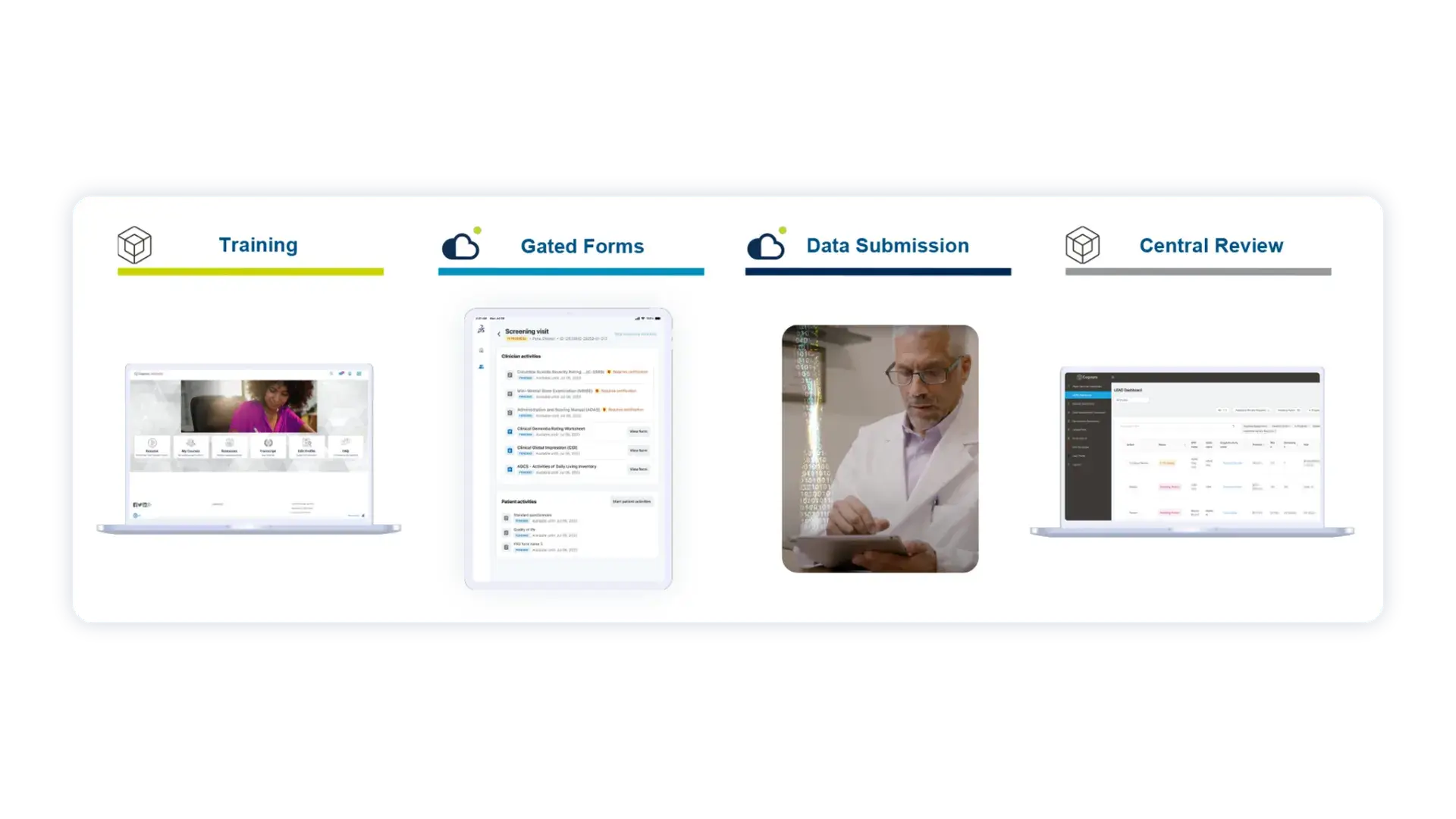
Video transcript: Hey, Brad. Thanks for joining us. Really excited about this partnership. I can't thank you enough for what you guys have done for Medidata and helping us get into this space. But why don't you take a second and introduce Cogstate to the audience and make sure everyone knows who you guys are? Sure. So not many of you maybe have heard about Cogstate, but we've been doing this for more than twenty years now. We started the company in Melbourne, Australia with an understanding of the importance of brain health in an aging population. We originally started by, as a digital disruptor in the area of cognitive assessment, so we developed computerized cognitive assessments. We validated those extensively with over five hundred peer reviewed publications supporting that technology. Our tech's been accepted by regulators, we're a class two medical device here in the United States. In twenty twenty we were really proud to partner with Aisai. Aisai is a Japanese pharmaceutical company who's just launched the first ever disease modifying drug for Alzheimer's disease. They're taking our technology into primary care physicians' offices here in the United States to help find patients who will benefit from those drugs. So that's sort of our origin story but you know, over the course of twenty five years with a really deep bench of scientific strength, what we've done is really evolve into an endpoint data quality company. We help pharmaceutical companies to ensure that in central nervous system disease trials, the assessments are complex the complexities of training raters all over the world is difficult, we make sure that we bring both science and technology to that to ensure that data quality in small studies with biotech companies in rare disease all the way through to global phase three successful Alzheimer's disease trials. Yeah. So let's talk a little bit more about some of those service offerings around the technology. So can you talk a little bit about kind of your radar training and central review capabilities and how do you how do you help make sure that technology is used appropriately in these studies? Yeah. So it's it's really important that when you're running a global central nervous system disease trial, the idea is that most of these assessments are being developed assuming you've got a patient delivering that a doctor delivering that to a patient one on one, and we're taking that to twenty countries in thirty seven languages. And what really we wanna do is reduce the error. So training those raters to deliver that in exactly the same way is critical. And and to the extent we can reduce the error, we will increase the signal strength and therefore, you know, help to deliver a much more successful trial. But what in in doing that, we have to have, you know, people who can review that data, so other humans who essentially review that data to make sure that that's being delivered in the right way. Yep. Great. So we have a rater training program up front. We can then use the metadata application to capture all that data and execute those visits. We've got a central review process on the back end. So we think CogState and metadata together can really make that whole experience one of the best experiences out there in the market. But I think neither of us want to stop there. We really want to go beyond the current version of what's out there to support CNS studies and create something even better. So I can wonder if you talk wanna talk a little bit about how our team's been working together to kind of take some additional steps in this whole process. Yeah. So the I think the first thing is to understand the real depth of the collaboration between metadata and Cogstate. That's been really important to us. Building that infrastructure that exists now to really work seamlessly between Cogsdata and Medidata. But this is an area that's ripe for disruption. Mean, we're running these trials in the same way essentially as we've done for twenty, thirty, forty years. And we have this wealth of data and we understand what patients look like, we understand the mistakes the raters make when they're delivering these assessment. And the opportunity to build a model and and bring tech you know, bring AI and the benefit of that to that to automate error detection, and then ideally stop the error from occurring in real time. And I think that's really what the exciting opportunity is. Yeah. So our team's been working together. You can see some of the items up on the screen to try to really take this data and actually, like you said, in the moment, try to error correct and give insights to clinicians as they're executing these studies to really move way past the current paradigm. Cool. Hey, Brad, thank you so much to you for coming on stage today and for your partnership with us. We are super excited to get this joint offering out to the market. It's a pleasure. Thank you.