





NEXT Shanghai: China’s Life Sciences Revolution

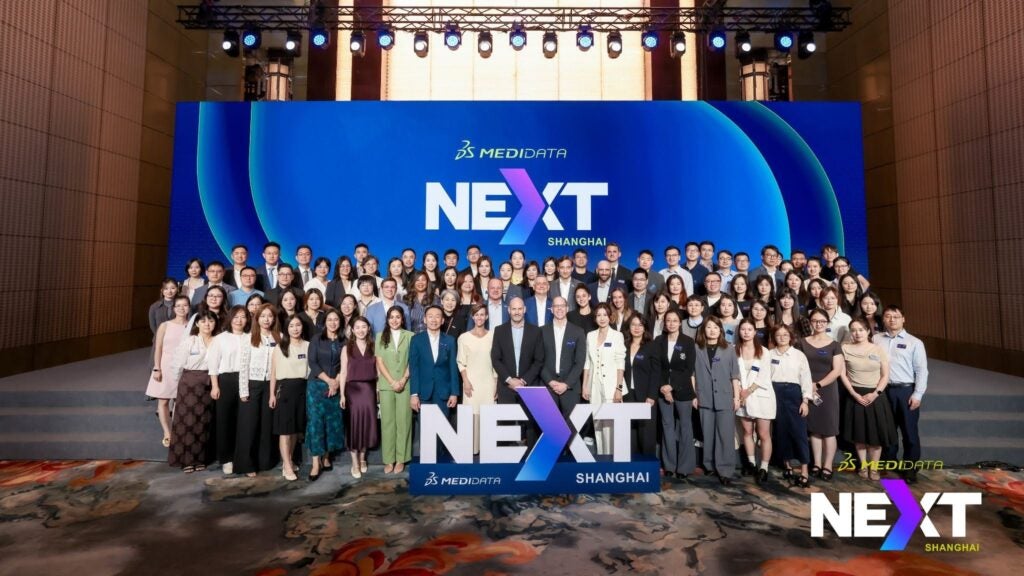
Medidata’s NEXT series takes us all over the world, giving attendees the opportunity to engage directly with local trends, challenges, and advancements, and explore how they’re affecting life sciences on a global scale. We recently celebrated the 15th anniversary of NEXT Shanghai with a deep dive into what’s driving clinical innovation in China and the wider Asia-Pacific (APAC) regions.
China’s life sciences industry is a particularly interesting and significant example, demonstrating exponential growth, and a willingness to embrace artificial intelligence (AI) and other breakthrough technologies that is outstripping other markets. This is giving the region an early-adopter advantage in this era of unparalleled transformation.

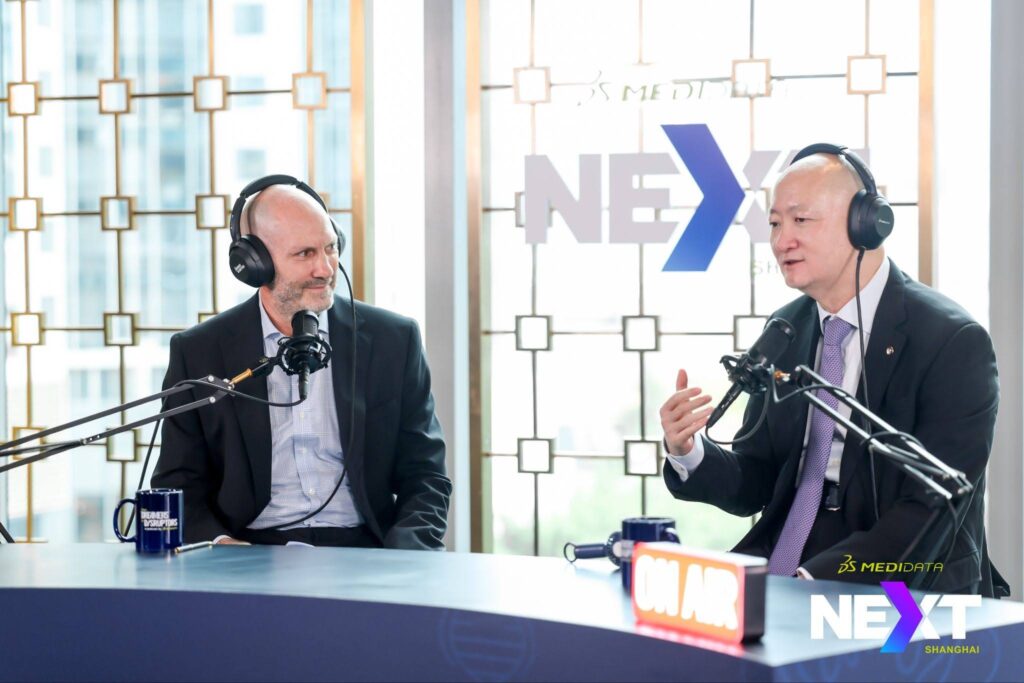
Leading lights from Asia’s healthcare scene joined us at NEXT Shanghai for a special episode of our “from Dreamers to Disruptors” podcast, sharing their perspectives on the past, present, and future of clinical innovation in China, and what that means for the rest of the world. Read the highlights from their conversations below.
China’s Life Sciences Boom
– Lisa Moneymaker, Chief Operating & Strategy Officer, Medidata
“I think the entire industry has been blown away by the innovation and growth here in China. Nik Morton [from Worldwide Clinical Trials] and I were talking yesterday morning about how we can support the growth, ambition, and overwhelming drive to bring new and novel treatments to patients that is clearly here in the industry: in the people that we've been talking to, and our customers, sponsors, and contract research organizations (CROs) alike.”
China’s Enthusiastic Embrace of Clinical AI
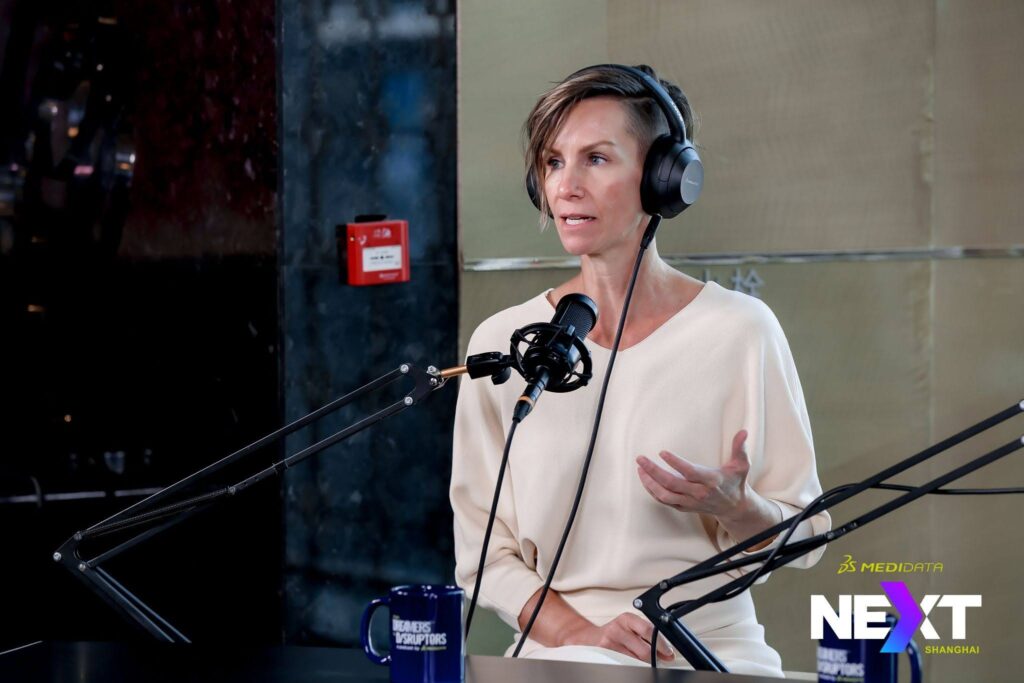
– Jeff Ventimiglia, Senior Vice President, Operations & Transformation, Medidata
“In Europe, I feel like there's a conservative approach to AI. They're dipping the toes into the water, trying out small use cases. In the U.S., we're much more ready to move forward, but still experiencing some initial hurdles. I was impressed at the number of companies that we talked to [at NEXT Shanghai] that are really applying AI to true clinical processes. They were talking about workflows. They were talking about Medidata Synthetic Control Arms®. They were talking about data management. They really have a mindset of, “We need to use AI to accelerate what's going on here.” I can see them setting the pace in terms of AI adoption, and potentially teaching the rest of the world how to get this done.”

Challenges to AI Adoption in APAC
– Megan Collett, Executive Director, APAC Operations Oncology, Worldwide Clinical Trials
“There are definitely early adopters within the region, [but] I think one of the challenges that we have is still with sites. For most sites, their primary purpose is to provide healthcare, and they feel very nervous about ensuring that their patients' data is protected. I think that's going to be our biggest challenge, not just in the Asia Pac region, but globally.
“We have to make it easy for sites and make sure that they feel comfortable. As with regulators, they need to see that there is a good governance process, that data can't be changed, that we're collecting the correct data to be able to get the drugs to registration.”
A Focus on Interoperability
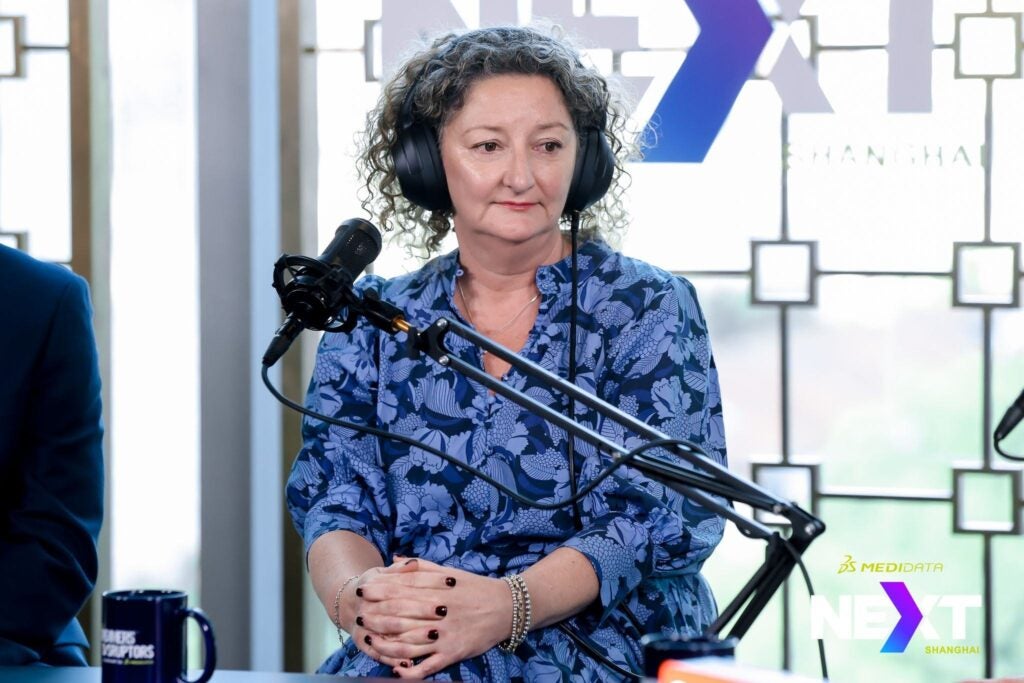
– Wayne Walker, General Manager, Head of Data Experience, Medidata
“What I took away is that there's a thirst for interoperability within AI. Yes, we're bringing our AI capabilities to the Medidata platform, but there were a lot of questions and conversations about how customers can integrate their own AI needs and models, as well as using ours within their own ecosystems.”
Akeso and the Evolution of China’s Life Sciences Industry
– Dr. Max Wang, Co-founder & Senior Vice President, Akeso Biopharma
“In China, the biotech industry started in the beginning of 2000, when WuXi Pharma was founded as a CRO company. The four founders of Akeso wanted to found a CRO company too, because that was the big trend. Back then, in China, most of the drugs on the market were biosimilars or me-too chemical drugs. What we wanted to do was to help other companies in China and around the world to develop large molecule drugs, including proteins, enzymes, and antibodies. That's how Akeso Bio was founded in 2012.
“We quickly realized that innovative drugs were the future, and started doing drug discovery in 2013. By 2014 we already had a good candidate, which was a CTLA-4 antibody. We licensed it to Merck for $200 million USD. That was actually the first China-derived innovative drug that was licensed to a top five pharmaceutical company in the world, and it made a big splash in China.”
The Importance of Change Management
– Wayne Walker, General Manager, Head of Data Experience, Medidata
“What was very interesting in the conversations around adopting AI and how it moves and disrupts organizations, was the focus on change management. Often times, we find customers don't pay enough attention to change management, to bringing people along on the journey of how it's going to make their lives better.
“My last question to our customers was how they have adopted AI and whether they had a change management workstream. It’s a small sample size, granted, but out of the 11 organizations, eight of them had a dedicated change management workstream. And the organizations that didn't have one said they had found that it was an impediment to the success of their implementations.”
Listen to the full NEXT Shanghai conversations in from Dreamers to Disruptors Episode 17 to learn more about the trends shaping clinical research in China and beyond.
Contact Us