






Strategies To Bridge The Gap Between Clinical Trial Protocols And Real-World Experience
Patient centricity and high-quality data are the foundations upon which modern clinical trials are built. Yet, the gap between protocol endpoints and execution of those goals expands into a chasm when study design does not account for the realities of trial participation. As that gap grows, so too does the direct impact on data quality and study outcomes. Therefore, the real-world experiences of patients and site investigators must be reflected in protocol design decisions, promoting improved patient participation and retention as well as operational efficiency.
Although budget and resource constraints can make it difficult for sponsors and study teams to consistently apply best practices for patient centricity — and, by extension, the collection of high-quality data — clinical trials’ high stakes for patients, sites, and public health demand a resolute effort. If an endpoint is important enough to include within a protocol, it is important enough to measure correctly. Doing so requires robust analysis of data collection systems, trial endpoints, and in-clinic-versus-decentralized execution strategies.
Start By Defining And Understanding COA And eCOA
Over the last decade, the complexity of clinical trial protocols has increased exponentially, commensurate with a 600% increase in data points being collected in clinical trials over that span.1 Research indicates that about 85% of trials fail to retain enough patients and 30% of the patients randomized into a study don't complete it.2 Further, about 17% of patients find completing any kind of questionnaire somewhat or very burdensome.3
While these statistics vary by source, they collectively paint a bleak picture of trial participation — specifically, trial sites’ ability to recruit, engage, and support patients throughout the clinical research lifecycle. To overcome this industry-wide challenge, it is important to first define and differentiate clinical outcome assessment (COA) science and electronic COA (eCOA) science (Fig. 1). Understanding the distinct role of each helps study designers choose the system, or combination of systems, that best accommodates real-world scenarios.
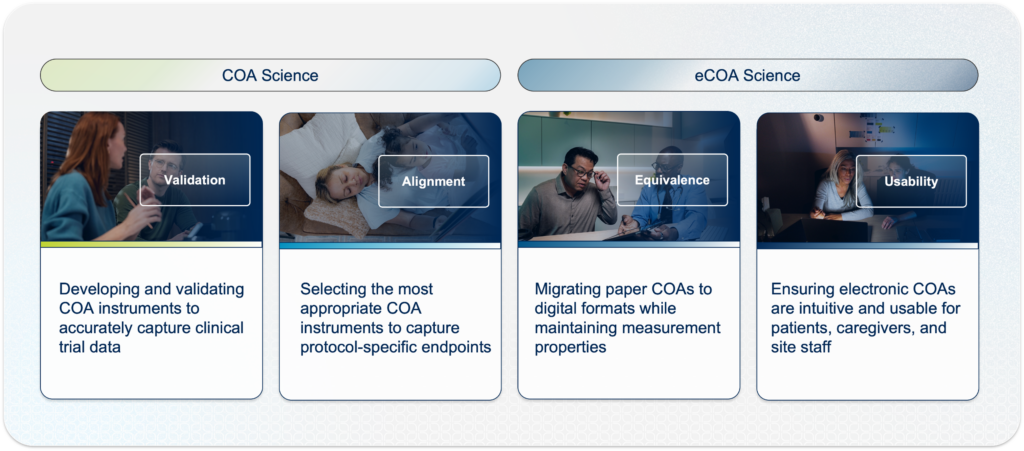
Fig. 1 — A comparison of COA science and eCOA science
COA science is focused on identifying optimal instruments to capture protocol-specific endpoints. It is modality agnostic, though the industry is increasingly capturing this data electronically, as well as developing novel instruments to do so more effectively. Meanwhile, eCOA science focuses on establishing usability and equivalence.
Usability centers on ensuring electronic tools are functional, intuitive, and not excessively burdensome for the patient population. Equivalence addresses whether electronic systems are comparable to analog, capturing the same type and quality of data as the original paper version. Although comparability once was problematic for the industry, ample evidence across a wide range of different questionnaires and response option types suggests that, when eCOA implementation best practices are followed, patients respond consistently regardless of the data capture modality.
Regardless of the number or manner of study endpoints, it is imperative to use a data collection method, or combination of methods, that is convenient for participants and intuitive for investigators. Study designers can make this determination by talking to users, garnering feedback, and iterating on that feedback. The key mechanisms driving this process are usability and feasibility testing.
Devote Appropriate Effort To Patient Usability and Feasibility Testing
The importance of usability and feasibility may be best illustrated through anecdotes. For example, a recent usability test investigated a device intended for use by a target population with conditions like Parkinson's, marked by dexterity challenges, tremors, and motor issues. The sponsor selected an eCOA system to record a daily patient diary, completed using a touchscreen tablet with large touch response areas for ease of use. To protect the tablets, the supplier added bulky cases and a thick screen cover to each device before sending them to patients.
The sponsor kicked off site initiation visits almost immediately, operating under the impression usability testing would be fast and straightforward. However, during the first wave of interviews, every participant complained of difficulty with opening the screen cover and logging into the device to answer questions. Additionally, by the time participants finally accessed the eCOA — often with the help of family members — they felt frustrated and rushed, causing many to skip the instructions and diminishing data quality.
In response, the unwieldy tablet covers were replaced with a thin silicone wrap that still improved grip and protected each device but also enabled participants to log in without difficulty. The second wave of participants was more thorough in reviewing the instructions and was able to answer the interview questions more thoughtfully. Thus, usability is not simply a checkbox activity, but confirmation that patients and sites are not being overly burdened by a tool or device and that responses are being presented and contextualized in a manner that promotes high-quality data collection.
Feasibility testing is equally important. Consider the example of patient-reported outcomes (PRO). In addition to asking that patients complete a daily diary, a study may require weekly or monthly feedback to be entered into the eCOA system. Individually, each ask may not seem burdensome, but completing a 30-item daily diary, combined with a 100-item weekly PRO, can quickly overwhelm even an enthusiastic participant. Some patients may respond by simply selecting the same answer for every question or skipping numerous entries, severely undermining data quality.
To evaluate feasibility, trial designers could have left a device with each participant for a week or a month in advance of study kickoff, gathering feedback on their willingness to complete the required tasks every day, week, or month over the course of a year-long trial. If participants respond that even one cycle of entries is burdensome, investigators must reevaluate co-selection, the instrument’s necessity, and/or secondary or tertiary endpoints.
Clearly Explain Expectations (And Prepare For Them Not To Be Followed)
COA instruments not only have to be aligned with target endpoints, but their purpose also must be clearly understood by sites and patients. The explanation does not need to be highly detailed; it just needs to provide ample context. For example, one study participant stated they spent three years of a 10-year study filling out long surveys but was never told that data was only analyzed behind the scenes. No physician reviewed the responses, and after realizing no one ever followed up on their feedback, the patient became frustrated and eventually stopped complying with the trial tasks.
Even a brief explanation can encourage patients to provide more thoughtful responses. Because most clinical trial information is collected passively, questionnaires and surveys often serve as a participant’s only opportunity to share their feelings and opinions within the trial. They are putting their bodies on the line and sacrificing their time; they want to know their thoughts have value.
In this respect, sooner is better than later. Sponsors must engage COA specialists early to define endpoint hierarchy while identifying any redundancies or gaps in coverage. COA instruments need to be vetted for intelligibility and relevance to the patient population, and response options must make clear sense. Too often, this engagement occurs as a trial is kicking off, and it is too late at that point to halt problematic aspects of the protocol without major repercussions.
Along those same lines, realize that decentralizing a trial does not automatically make it patient-centric. Remote patients present unique challenges when it comes to ensuring data is collected in accordance with the protocol. In the clinic, patients are less likely to be interrupted by the distractions of everyday life, and investigators can better ensure that PROs and other assessments are completed as intended. The counterpoint is that someone can take more time to reflect when they are at home, rather than in the clinic, and perhaps the responses provide greater insight. Both options have challenges.
When patients are not in the clinic, real-word distractions can interfere. Experienced investigators can likely point to numerous examples of patients earnestly trying to comply with assessments in ways that fall outside the conditions under which those tests were validated. For example, a validated depression scale is not necessarily intended for administration while a patient sits in a fast-food drive-thru line. Or the participant has limited time to spend with their children in the evening, so they rush through their assessments.
So much more is asked of clinical trial participants than ever before, whether that means using wearable devices or completing assessments at home regularly. That added responsibility can leave participants feeling as though they are always being monitored. Trial design must factor in the very human reactions to added responsibility, pressure, inconvenience, and frustration, as well as more common issues, like being tired or simply forgetting to complete an assessment.
Prioritize Quality Over Quantity
Bridging the gap between clinical trial protocol requirements and the real-world experiences of patients and investigators begins with applying the lightest possible touch to collect reliable data. Prioritize COA instruments for primary endpoints, and carefully evaluate whether those tied to a secondary or tertiary endpoint are truly necessary.
Additionally, provide a reasonable time period for responses. For example, giving a patient a 12-hour window to complete each assessment reduces the pressure to respond immediately. Consider that a participant may be more thoughtful in their responses at home, when they have time to contemplate, versus completing a survey in the clinic, when they may be ready to leave and reluctant to spend another 30 minutes answering questions. Allowing patients to choose when they complete assessments can improve the quality of the data collected.
Technology provides clinical investigators with a multitude of options for gathering diverse insights, but fundamentally good study design remains the same. Pharmaceutical sponsors must resist the temptation to collect excessive amounts of data when the necessity of each endpoint, the methods of collection, and the burden placed on sites and patients have not been adequately evaluated. Remember, if a data point is important enough to collect, it is important enough to ensure it can be collected in a way that supports both high-quality data and a positive participant experience.
Want deeper insights on patient-centric eCOA design?
Watch the on-demand webinar: The True Science Behind eCOA, Shaped By Patient And Site Insights
References
-
-
-
-
- Rethinking Clinical Trials Grand Rounds, Nov. 2025 (Galuchie & Smith); https://rethinkingclinicaltrials.org/event/grand-rounds-november-21-2025-insights-informing-strategies-for-optimizing-the-collection-of-clinical-trial-data-laura-galuchie-bs-zak-smith-ma/
- Accenture Clinical Trial Services Report (2025)
- CISCRP Perceptions & Insights Study (2025); https://www.ciscrp.org/2025-perceptions-and-insights-study-dashboards
-
-
-
Contact Us