






Man Up to Cancer’s Trevor Maxwell on Community and Advocacy
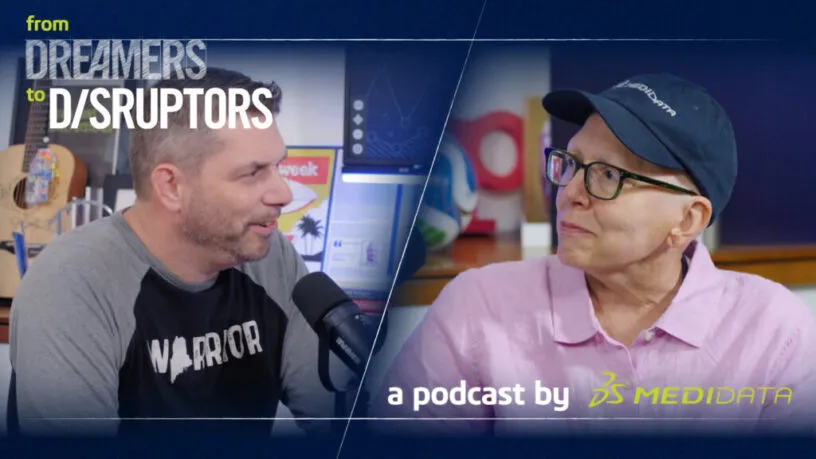
Welcome to the Clinical Minds “Innovator Insights Corner,” where we’ll be sharing fascinating stories, perspectives, and predictions from the guests of “from Dreamers to Disruptors,” a podcast by Medidata exploring life sciences innovation and the visionaries behind it all.
Cancer diagnoses and the treatments that follow are some of the hardest challenges that anyone can experience. But that doesn’t mean our experiences will be the same, or even similar. Gender is one of the many factors that can define how we face cancer, and we need to understand its impact to ensure everyone gets the best support possible.
Trevor Maxwell knows firsthand how men can struggle to reach out and form communities when grappling with a life-threatening illness. He shared with our host, Chief Patient Officer Alicia Staley, the lessons that led him to found his nonprofit Man Up to Cancer, and how we can cut through our doubts to become advocates for ourselves and each other.
Mental Health and Toxic Positivity
A cancer diagnosis is a frightening, life-changing event. Sometimes one of the biggest steps a patient and the people around them need to take is acknowledging this. Trevor shares the “deep feeling of shame” he felt around learning that he had cancer, and how difficult it was to process his situation.
“I felt ashamed that I had gotten cancer, and that somehow I wasn't responding to it right,” he says. “I would look at how [other people seemed to be coping] with cancer, and all you see is this positivity, like, “We're raising money and running 5Ks. I'm working full-time while going through chemo,” and all this positive stuff. I wasn't working because of my mental health, not even because of my cancer, so I felt like a complete failure.”
“I'm 35 years into my cancer journey, and the phrase “toxic positivity” has started to bubble up when you're talking with other cancer survivors,” Alicia replies. “Somehow we've gotten into this habit of glossing over the experience by saying, “If you can basically climb Mount Everest and raise money for cancer research, that's when you're a true survivor.””
“Sometimes just putting one foot in front of the other is the biggest win of all.”
– Alicia Staley, Chief Patient Officer, Medidata, Dassault Systèmes
Trevor thinks this is especially true for men. “I didn't see stories of people struggling, whether it's movies or magazines or even online. I was basically like, “Am I just the outlier? Am I weak, or are other men going through this too, but they don't have permission to talk about it?””
Trevor works to share a warts-and-all picture of what it means to have cancer, so that the experience isn’t made even more challenging by an unfounded sense of failure to perform “in the right way.” Man Up to Cancer gives its members the permission to speak freely and honestly about their experiences.

Gendered Differences in Cancer Diagnosis and Treatment
We all behave and react in our own individual ways, regardless of the identities we hold, but, as Trevor says, “Talking from a population level, behavioral science shows us that there's differences in the way that the sexes respond to disease.” The way we're socialized means men are less likely to reach out, to be comfortable expressing their emotions, than women are.
“For example,” he continues, “if you were to walk by a cancer center, and you looked in the window and you saw a group of women in a circle, maybe holding hands, maybe crying, maybe being vulnerable together, you'd be like, “Oh, this is a Wednesday.” If you saw a bunch of guys doing it, you'd probably be like, “That's interesting,” because that's our culture, and that's how we're conditioned.”
“A lot of guys are taught that being vulnerable is wrong, showing your emotions is wrong.”
– Trevor Maxwell, Founder, Man Up to Cancer
Drawing on his own experiences and research into the gendered differences in cancer diagnoses, Trevor came to see the value in giving men a space where they could feel comfortable sharing their experiences and challenges with each other.
“I love the guys that go bench press huge weights in the morning, drive their truck, go to their counselor or therapist, and then come onto a Man Up to Cancer Zoom, and they're okay crying in front of the guys about what they're going through,” says Trevor. “There's room for that in the modern man.”
“I think what you have to do in part of this cancer journey is find your tribe, find your wolf pack, and be able to connect with people that are really going to help you,” adds Alicia.
Getting Involved in Cancer Support
Both Trevor’s and Alicia’s journeys to become leading patient advocates began with their own cancer diagnoses. They draw on their experiences and identify patterns in the challenges that countless people face in the course of treatment and recovery, to offer everything from high-level policy advice to a helping hand to those in need.
But becoming an advocate isn’t easy. Trevor’s story demonstrates how he had to overcome his own fear and uncertainty before founding Man Up to Cancer was even a glimmer on the horizon. He shared words of advice for anyone at the start of their own cancer journey who feels the call to do more but doesn’t know if they’re able to.
“There was a time early on in my disease when I wanted to get involved,” he says, “but I was also thinking, “I don't know, because I'm sick, if I'm good enough to help. Or if I'm depressed, does that mean I'm not good enough?”” But Trevor eventually found the strength to ignore those doubts, and getting involved with the online community Colontown became the first step on his path to becoming an advocate.
“If you're going through cancer, or a family member's going through cancer, and you feel a call to get involved in policy, or advocacy, or clinical trial design, listen to that voice. There are people, like Alicia, like me, like so many others, who will welcome you into the movement and give you roles in it. There are roles to play, but you have to feel like you're worthy enough. And sometimes patients struggle with that and wonder if they are worthy of having a voice. You are, and you should. So reach out.”
Listen to Trevor Maxwell and Alicia Staley’s full conversation in from Dreamers to Disruptors Episode 15 to learn more about Man Up to Cancer’s work and the path to becoming a patient advocate.
Contact Us