IQVIA’s Tracy Mayer on Building Truly Patient-centric Clinical Trials

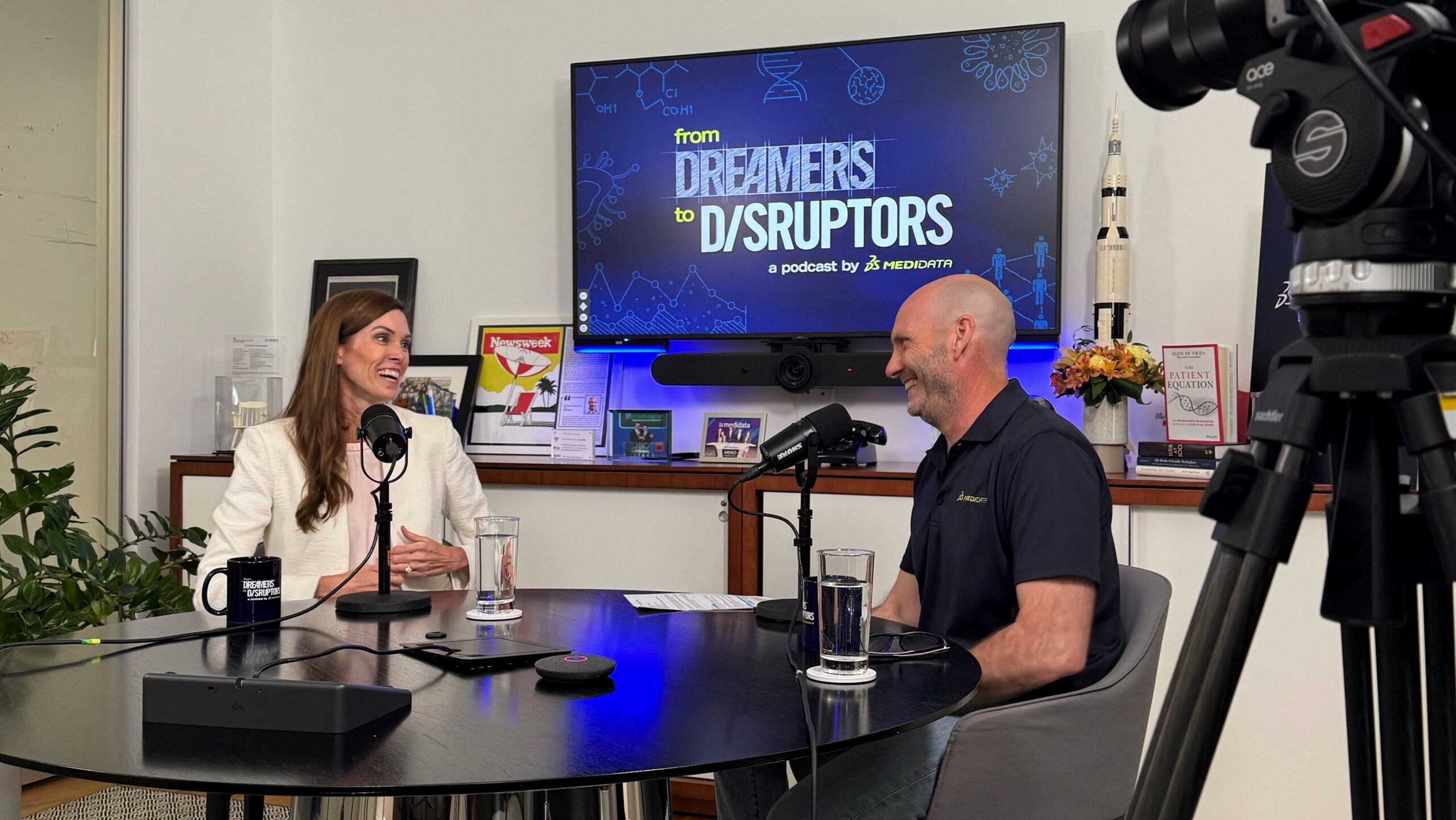
Welcome to the Clinical Minds “Innovator Insights Corner,” where we’ll be sharing fascinating stories, perspectives, and predictions from the guests of ‘from Dreamers to Disruptors’, a podcast by Medidata exploring life sciences innovation and the visionaries behind it all.
Patients are at the heart of everything we do in clinical trials. And technology has always been central to unlocking new treatments and enabling longer, happier lives.
In this era of rapid digital transformation, we have more tools than ever before. But how do we make sure that the focus on novel technologies doesn’t distract us from our mission?
IQVIA works with the biggest names in pharma, providing clinical research services to deliver cutting-edge studies. As IQVIA’s SVP, Data Sciences, Safety and Medical Writing, Tracy Mayer has unparalleled insights into the technologies driving clinical trial innovation, and how to use them to ensure patient centricity every step of the way.
Connected Devices and Wearable Sensors
Wearable technologies let us remotely gather health-related data such as heart rate, blood glucose levels, physical activity, and countless other metrics. Advances in these monitoring devices are transforming how clinical trials collect information about patients and helping us build patient centricity throughout our studies by letting people engage with trials on their own terms. Remote data gathering has been instrumental in the growth of decentralized clinical trials, which allows us to engage a broader range of patients while also reducing burden on frequently overstretched sites.
“There's a huge opportunity in connected devices. Sensors do a great job taking data from patients all the time, not just the day you come into the clinic. There's a lot beyond basic vitals collection that sensors and wearables provide us in clinical trials, and we're just not taking advantage of it enough.”
– Tracy Mayer
New innovations don’t come without their challenges; adoption has been slow in many areas despite the benefits offered by wearables. Fragmented decision making and resistance to change can affect how quickly and effectively powerful connected devices are being adopted into clinical trial processes.
“Connected devices sit within my business unit,” says Tracy. “We think it makes a lot of sense to put it there, because it's a source of data, and we're looking at the entire data picture. But [in our industry], decision makers for connected devices are all over the place. It's really easy to find who decides for clinical or data management, but figuring out how a sponsor makes a decision around connected devices has been a real challenge.”
Wearable smart devices promise cleaner, faster data collection—if we can develop the right processes for adoption and integration. If pharma companies can overcome these challenges, we stand to gain valuable insights across countless conditions and reduce the burden on both sites and patients.
Accelerating Change in Clinical Trials
Delivering clinical trials faster can mean the difference between life and death. Tracy knows first-hand how a short amount of time can make a big difference, after a neighbor with pancreatic cancer passed away two weeks before the chance to enroll in a promising new trial. “It's a reality check,” she says. “If they could have gotten that trial up and running two weeks faster, this person could have had a better outcome, or at least more time and a better quality of life.”
COVID demonstrated the clinical trials industry’s ability to act quickly, delivering medical breakthroughs at a never-before-seen rate. “We jumped the hype curve, and we made it all happen, and it worked,” says Medidata CEO Anthony Costello, “but then we sort of slipped back into this mode of, ‘let's go slowly, let's be selective.’” We know the potential for accelerating studies, but what’s holding our industry back from maintaining that life-saving pace?
“The trick is how to pick the right framework of incremental technology and process improvement to [accelerate] the ten-year-long development process into something that looks a lot more like what we did during COVID.”
– Anthony Costello
Tracy highlights genuine commitment and a willingness to be methodical as the essential ingredients to accelerate change and adoption of new technologies. “It's really about setting measurable targets and holding people accountable for achieving them,” she says. Tracy has a team of twenty whose sole focus is developing novel ideas and discovering how to execute them. “You have to be willing to invest in those types of resources and find people who are really good at that.”
Tracy’s Call-to-action: Ensuring True Patient Centricity
Patient centricity is a frequently stated goal across our industry. This makes sense—we’re all working together to create treatments that let people live longer, healthier lives. But can too sharp a focus on the latest technologies distract from those fundamental values?
“For me, the call to action is getting back to truly patient-centric clinical trials, where the patient is at the heart of it,” says Tracy. Technologies like AI and connected devices can help support the goal of getting treatments to market as soon as possible. “I think we've lost sight of the goal a little bit in doing all of these other things,” she continues. “AI is a big aspirational thing. It's really exciting people. But our industry doesn't exist to do AI; our industry exists to bring medicines to patients faster.
“So let's get back to that thread and figure out how to use these [technologies] that we're talking about to actually make that happen.”
This isn’t a call to stop investing in these tools, or to undervalue their potential to deliver faster, safer treatments. But we should remember that they’re a means to an end; and we should never forget that our tools and processes are all in service of patients.
At every stage, we should be asking how these tools are benefiting patients—not how processes can be made to fit our latest technologies. This will keep patient centricity at the heart of everything we do.
Listen to Tracy Mayer and Anthony Costello’s full conversation in from Dreamers to Disruptors Episode 6 to dive deeper into approaches to accelerate adoption of new clinical trial technologies, and how to boost patient centricity every step of the way.
Contact Us