Lee Shapiro on Data-driven Preventative Medicine and the Fight against “Sick Care”
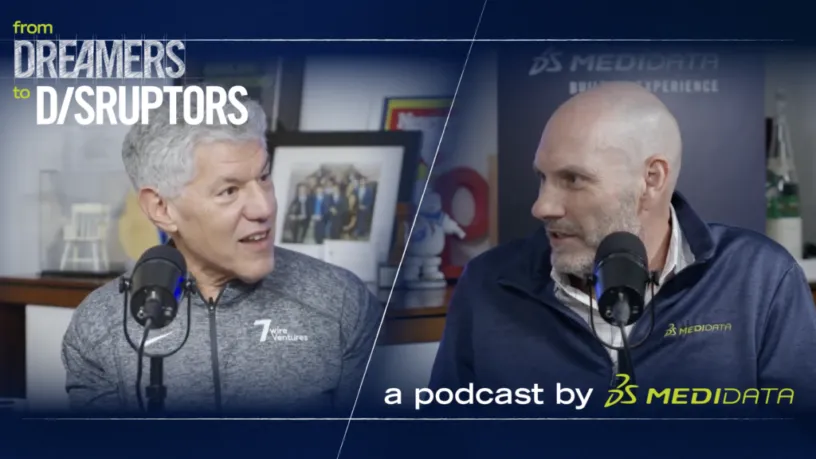
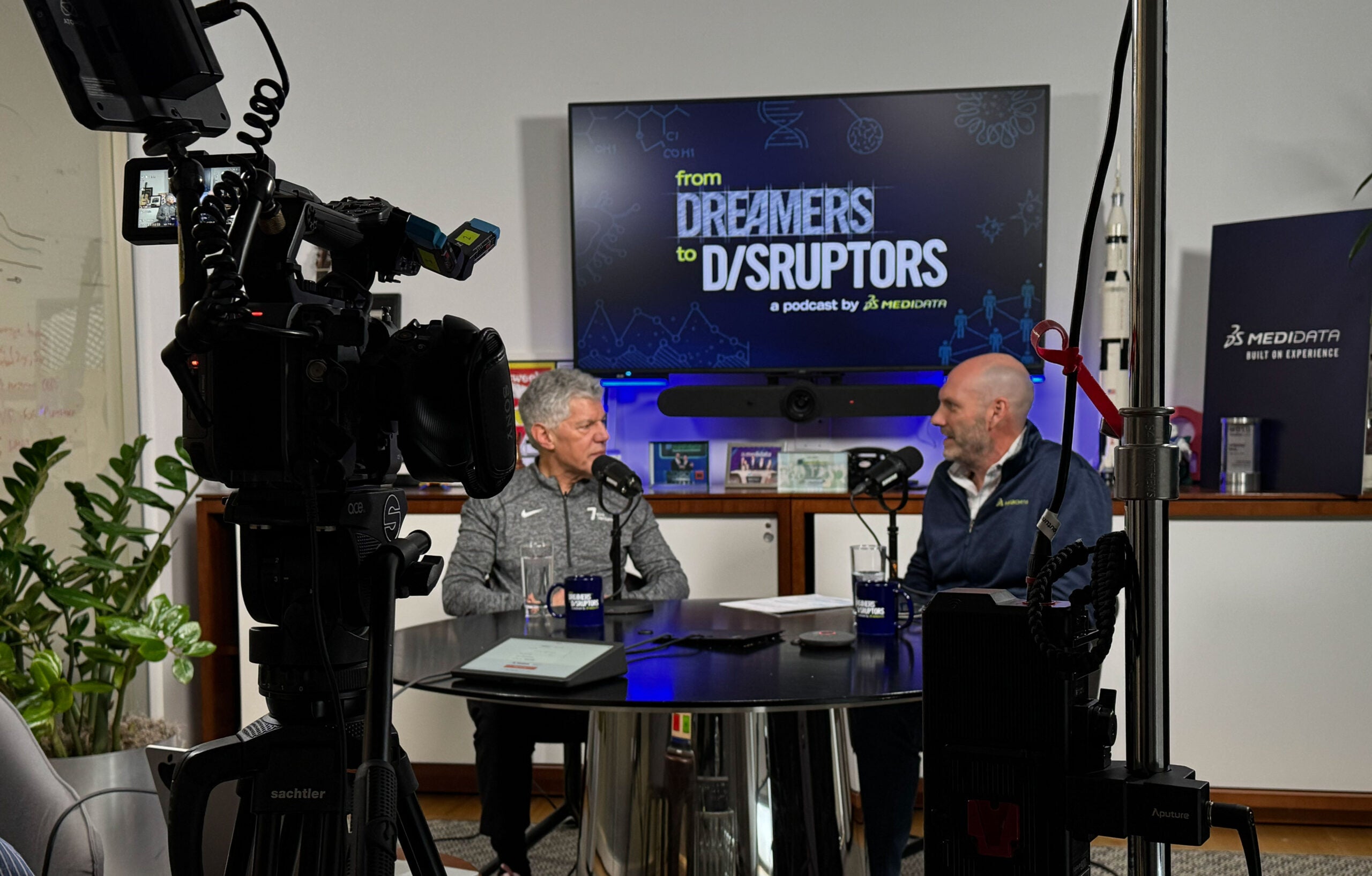
Welcome to the Clinical Minds “Innovator Insights Corner,” where we’ll be sharing fascinating stories, perspectives, and predictions from the guests of ‘from Dreamers to Disruptors’, a podcast by Medidata exploring life sciences innovation and the visionaries behind it all.
Entrepreneur Lee Shapiro has a powerful perspective on innovation in life sciences. His current role as a managing partner and co-founder at 7wire Ventures is just the tip of the iceberg; he served as president of Allscripts for over a decade, steered Livongo through its IPO and merger with TelaDoc, and has lent his expertise to numerous organizations including Click Therapeutics and Medidata.
Lee shared his insights into the evolution of clinical trials—predicting the trends that will shake up our industry and how we can drive structural change that will shift our model of “sick care” back towards genuine healthcare for patients.
“Sick Care” vs. Healthcare
A key to understanding Lee’s career, and the companies and technologies he’s chosen to focus on, is his distinction between healthcare and what he calls “sick care”. With sick care, treatment only kicks into action when something is already wrong with a patient, while a more advanced system of healthcare looks beyond treating illness to building robust systems that enable longer, healthier lives.
“When we were building companies like Allscripts, we were trying to help provide better healthcare inside the four walls of doctors’ offices and hospitals,” he says. “We found that it was really hard to do transformative work there. A lot of what we were doing was substitutive—we were using technology to take what were paper processes and make them somewhat better. Yes, we could give [doctors] more information, but the process was still pretty much the same, because the facility and the healthcare factory still operated the same way.”
That realization shifted Lee’s focus to empowering people to better manage their health and lifestyles. This means giving them more direct access to health data, particularly by leveraging wearable devices so they can monitor and adjust their behaviors to achieve better health outcomes.
“We know that you want health not healthcare, and we also know that you're a consumer,” he says. “We don't want to treat you like a patient. We're going to treat you like someone who’s making decisions and having an active role, as opposed to a patient that's submissive and having something done to her or him.
“And so the companies that we build and support through 7wire all have this common theme of, ‘How do we create great consumer experiences?’” he continues. “Because that's what keeps people coming back. How do we demonstrably, objectively improve outcomes, so you have data you're capturing to show that things are better now? That also motivates you to keep using it and provides a return on investment [for pharma companies].”
“These days, I'm wearing an aura ring and an Apple Watch. Everybody's standing on a weight scale. They're measuring their sleep, they're measuring their steps, they're measuring their diet… These things are becoming more capable of measuring what we do, 24/7. Turning that into something useful for a healthcare [system] rather than a sick care system seems eminently doable.”
– Anthony Costello, CEO, Medidata, Dassault Systèmes
How Click Therapeutics Is Transforming the Consumer Experience
Through innovative use of data and technology, we have the opportunity to completely transform the pharmaceutical industry’s relationship with consumers, developing a deeper understanding of their health journeys and arming them with life-changing tools and advice.
Lee uses Click Therapeutics (where he formerly served as a member of the board) as an example of an organization that’s leading the way. Using FDA-approved digital therapeutics, Click is extending the relationship with a consumer beyond the point when a drug is prescribed to them, which has traditionally been the last point of contact between the patient and pharma company.
“I recall a chairman of a large global pharmaceutical company saying to me, ‘Every day around the world, there are 3 million people taking our medications, and we know nothing about them.”
– Lee Shapiro
Click’s software-based treatments forge a lasting connection with the consumer, delivering valuable information to them, while also supplying a steady stream of data back to the pharma company.
“What Click is doing is getting data, getting feedback, being able to help people navigate what's occurring with their disease,” Lee says. “[With digital therapeutics] we can build a much deeper relationship for a life sciences company with that individual patient.”
“I think this speaks very much to this concept of moving from sick care to healthcare,” adds Medidata CEO Anthony Costello, “because it really is geared towards behavioral change that can steer the course of your sick care problem [towards genuine healthcare].”
Lee’s Call-to-action: Data-driven Prevention and the Future of US Healthcare
In line with his distinction between sick care and healthcare, Lee predicts some necessary changes to the provision of healthcare in the United States.
“We're faced with a significant challenge today, with healthcare expenditure in the US approaching 20% of GDP that just can't be sustained,” he says. “We're now seeing the burdens on individuals who are facing health insurance premiums that are more than their mortgage payments.”
The solution? A stronger focus on preventative measures that both improve individual outcomes and reduce the financial burden of last-minute interventions on the healthcare system. “We're spending so much on downstream health impact,” says Lee. “We have to start shifting the way we think about things earlier on.”
To encourage individuals to take actions that improve their health, we need to enable and incentivize those behaviors and empower consumers to engage more actively with their doctors about their health and options for changing their lifestyles. Fortunately, evolving technologies like wearables and digital therapeutics are making these actions easier.
“With some of the AI tools that are available, you can start to look at and assess the data to say, ‘What does this mean?’ and use it as a vehicle to be talking about with your doctor,” says Lee. “Know your data, understand your information, and demand that you get treatment for the cause, not just for the symptoms.
“We need to do a much better job in terms of aligning incentives between providers,” he continues. “They make a lot more money on procedures than they do on prevention. We need to insist on changing that dynamic and seeing that prevention becomes really paramount. And if we can get there, I think we can really help improve the health trajectory of our country.”
Listen to Lee Shapiro and Anthony Costello’s full conversation in from Dreamers to Disruptors Episode 10 to discover more insights into the technologies driving lasting change in healthcare.
Contact Us